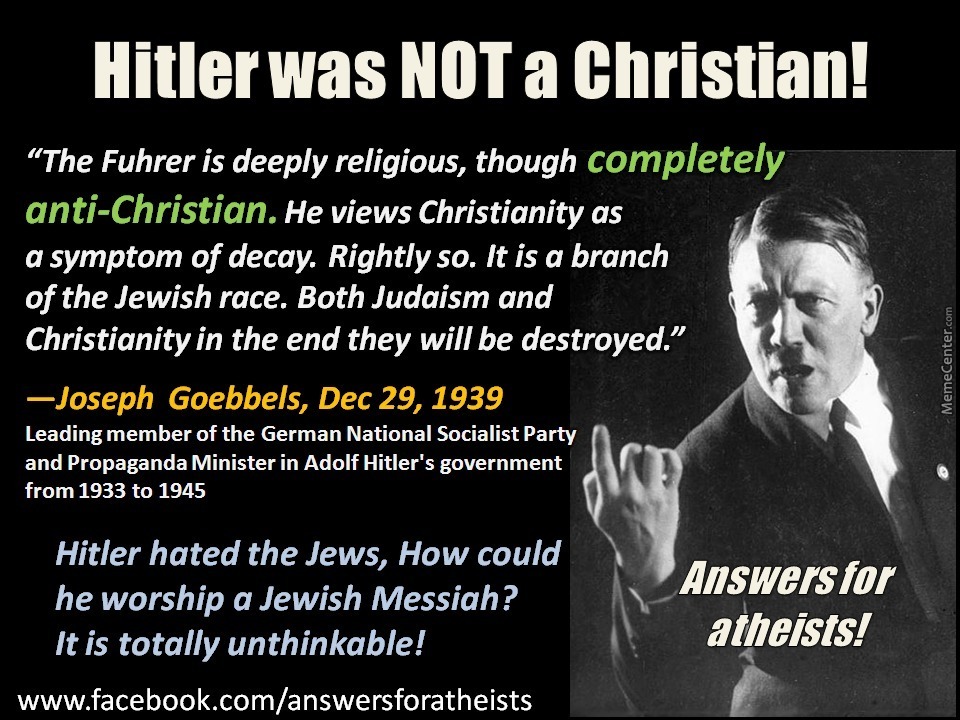
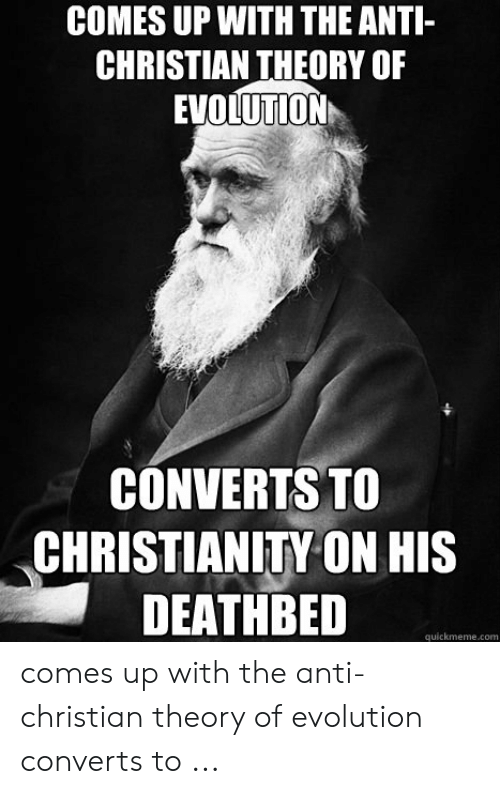
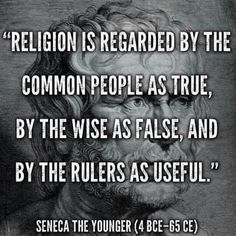
Terrible. Both Christians and atheists have this fascination of claiming Hitler was on the other team. And they do this by taking things out of context, and then by ignoring everything that disagrees with their view.
Let’s break this down. Hitler wasn’t a Christian. He was definitely anti-Christian. He was more of a pagan. He actively persecuted Christians as well as the Catholic Church. He detested Christianity.
But he wasn’t an atheist either. He was a theist, but he took on a pagan stance.
While he was rising in power, and even in the Mein Kampf, he did claim to be a Christian. But as the Nazis took power, they started promoting what was called positive Christianity, which really stripped Christianity of it’s foundations. Positive Christianity denied that Jesus was divine, rejected the Jewish elements of the religion, including the Old Testament, and even pitted Jesus as an Aryan fighter who fought against Jews.
Hitler did agree to a Reich concordant with the Vatican, but it was more of a show than anything else, as it generally ignored it and persecuted the Catholic Church anyway.
Hitler also didn’t like atheists though. He found them to be uneducated. But really, Hitler was infatuated with occultism, and had a belief in some sort of god that often was conflated with nature. So he was religious in some sense.
As for the last statement, many Christians hated the Jews, yet still worshiped Jesus. It wasn’t totally unthinkable for millions of Christians.
First, evolution isn’t anti-Christian, nor did Darwin think it was. He instead stated that one could be an ardent Theist and an evolutionist. This is a view that many Christians take today.
The whole conversion to Christianity on his death bed comes from one Lady Hope. Lady Hope probably never met Darwin, was not there at his death bed, and his kids completely reject the story, as do most historians.
Darwin was more of an agnostic in the last years of his life. His belief slowly slipped away during his life, but he ended up as an agnostic.
Really, this again is an appeal to authority, and one based on a false narrative.
This meme comes up quite a bit. This is one of my least favorite types of memes, as it really is an appeal to authority, and more often than not, the quotation is inaccurate. This quote is most likely inaccurate, as in Seneca never said it. Looking through Seneca’s works, it just isn’t there.
The difficult thing with trying to nail this quote down though is that it has been repeated thousands of times, and doing a quick search brings up hundreds of “quote” websites that never cite where the quote came from. However, uncovering the source isn’t impossible.
The first mention of this quote, that I can find comes around 1903, at earliest. It can be found in the book “Little Journeys: To the home of great philosophers” by Elbert Hubbard. There is no citation there. The quotation is also a bit different as wise is changed to philosopher, and the tense is past, instead of present.
That isn’t where the quote most likely began though. Instead, it most likely originated with Edward Gibbon in his “The History of the Decline and Fall of the Roman Empire,” which was fully completed in 1789. The relevant section states:
“The policy of the emperors and the senate, as far as it concerned religion, was happily seconded by the reflections of the enlightened, and by the habits of the superstitious, part of their subjects. The various modes of worship which prevailed in the Roman world were all considered by the people as equally true; by the philosopher as equally false; and by the magistrate as equally useful. And thus toleration produced not only mutual indulgence, but even religious concord.”
Basically, Gibbon was writing about the views of the Romans, and later on someone simplified it and placed it on the lips of Seneca in order to give it more authority. It also have to be noted that Gibbons was quite hostile to religion, and his biases often cloud the history he was purporting to record.
The quote from Gibbons is part of his wider narrative that saw paganism as tolerant, and Christianity as intolerant. He would largely blame Christianity for the decline of Rome. We can see this idea in this particular quote. He’s not talking about religion but modes of worship, and he’s largely talking about paganism here as that is what really prevailed in the Roman world. He then tries to skirt the issue of how there were persecutions of Christians by saying that the Roman leaders just found these modes of worship useful, instead of acknowledging that the Roman leaders also became passionate believers as well.
So to sum up, the quote isn’t from Seneca, but instead from Gibbons. Gibbons allowed his biases to really guide his history, and the quote really is more of an attack than anything else.
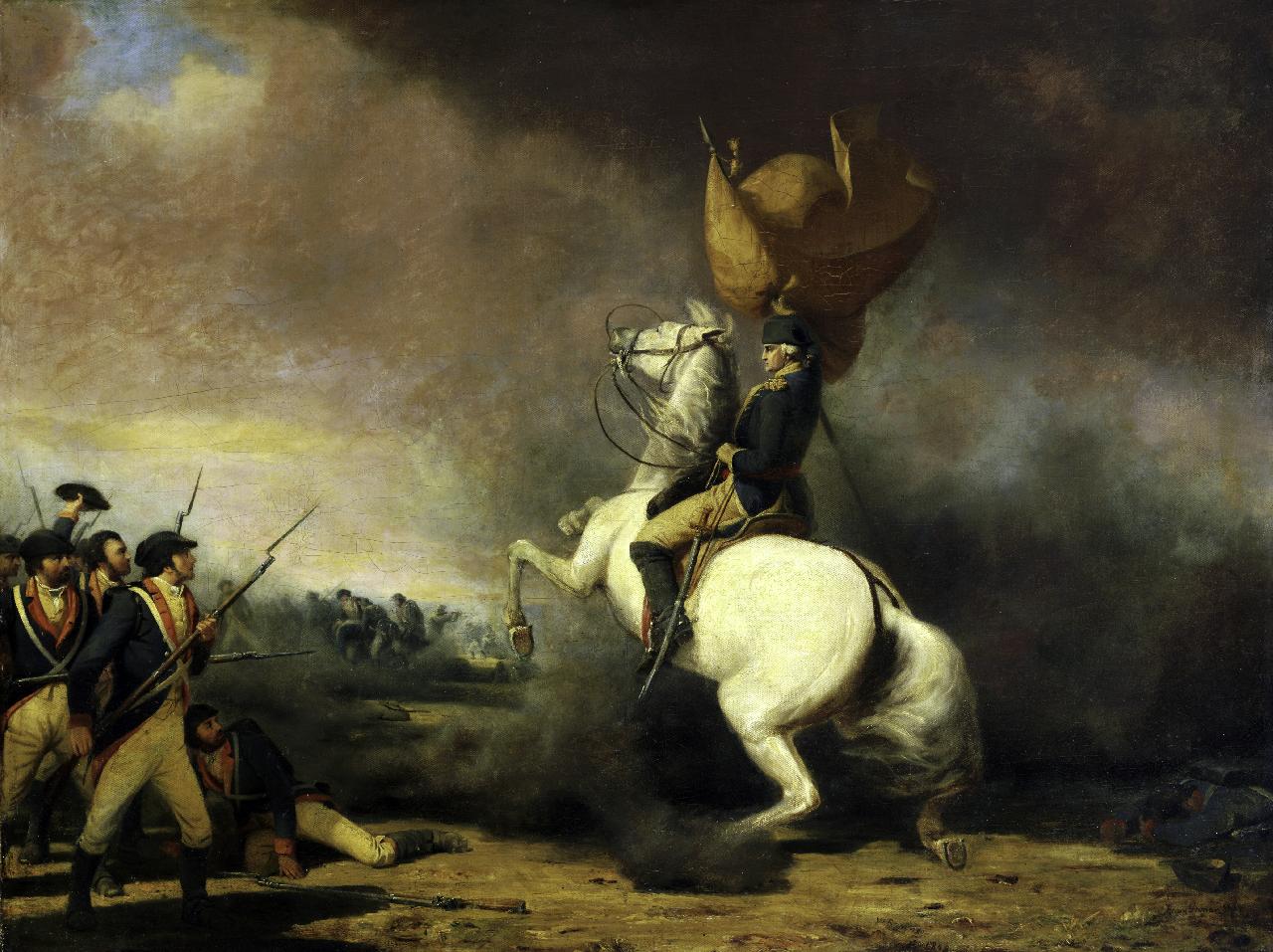
George Washington would be the United States first president. Before him, the country worked through the Articles of Confederation, and it provided some interesting characters.
While there were presidents before George Washington, they presided over a different United States, so to say. So as we know, the United States declared independence in 1776. The Revolutionary War ended in 1783, and George Washington was elected in 1789. So we can see why during the most early years, right after the declaration of independence, there was no need to have a formalized president. We were in the middle of the war, and we had adequate military leadership. But as the war was nearing an end, there was a push for a more central leader.
And here John Hanson steps onto the stage. The year was 1781, and two things occurred. First, the adoption of the Articles of Confederation were passed. It was the first constitution of the United States, but it only provided a very weak central government. In 1787, there was a Constitutional Convention in Philadelphia. There the delegates were authorized to amend the articles, but in secret closed door meetings, a new Constitution was drawn up. It was that Constitution that gave the central government more power. It would be this second constitution that George Washington would be elected under.
The second important thing in 1781 though was the election of John Hanson as President of the Continental Congress, or as it was also called, President of the United States in Congress assembled. Now, the Articles of Confederation did not have an executive branch. And the President was more of a ceremonial title. But he was required to do a few things such as be a neutral moderator for discussions, sign documents and respond to correspondence.
Hanson would only served a 1 year term; however, that is because that was that the Articles stipulated. Now, part of the problem with his presidency though was that the Articles didn’t really define the office. This is what it has to say about the position: “The United States in Congress assembled shall have authority … to appoint one of their members to preside, provided that no person be allowed to serve in the office of president more than one year in any term of three years.”
However, in a book by Edward Cody Burnett, titled the Continental Congress, he makes the argument that others had previously held the office. First it was Samual Huntington, who was basically grandfathered in. He was already presiding over the Continental Congress, and when the Articles went into effect, he just remained. He would later be elected to the office, but he declined the position. Thomas McKean was then elected, but served only a few months, resigning when the British surrendered at Yorktown. A new session of Congress was then held, and it was there that Hanson was elected.
A quick note. Alfred Knopf wrote a book titled The New Nation: A History of the United States During the Confederation 1781-1789. He points out an interesting character by the name of Robert Morris. Through 1776-1777, he had conducted a lot of the Congress’s transactions, and in 1781, he was asked to serve as Financier, a position that had recently been created. He was reluctant to take the office, but Congress enticed him by giving him quite a bit of power. He was able to make all of his own appointments, with no say from Congress. Anyone in the government who handled money only served if he wanted them to. He could borrow money from any foreign country, and import and export goods, all on the country’s tab. He ran his own foreign affairs department, and could offer contracts to supply the army, without any say from Congress. He would then take over the Marine Department as well.
He actually backed governmental notes, with his own personal credit, which gave confidence back to money backed by the government. He was really the first executive officer of the United States, even though he wasn’t granted power from a constitution, but from Congress itself.
When we get down to it though, those presidents under the Articles of Confederation (12 individuals including Hanson) basically served as interim presidents. They didn’t run the country. They didn’t warrant blame or praise for what happened. They served as president, but in a much different fashion than George Washington and those who followed.
I
tend to see things in shades of gray. Maybe its because I like
debating with people, and with a lot of gray, there’s a lot of room
for disagreements. That or I just find black and white to be too
boring. I like having more substance, and room to explore.
However,
I understand black and white. Its easy. It gives definitive answers.
And it may just be part of human nature to see things in that manner.
For our ancestors, it was a huge benefit. It allowed them to make
efficient decisions that their survival depended on; this is a friend
as they are in my group, that is a foe as they are other.
It
is a trait that we are born with, and while at one time it may have
saved our ancestors lives, it also has caused a lot of trouble. Being
a historian, this issue pops up quite regularly. People have a
tendency to want to categorize themselves as good, or moral, and
those who differ as bad or immoral. Which may be somewhat fine, but
when that sort of view is used to define historical figures, often
the result is that those individuals become demonized.
Lets
face it. Very few people from history, when completely examined, can
be seen as perfectly good or moral. Even those who we idolize as
pillars have their dark sides, especially when judged according to
today’s sets of guidelines and morality. Simply, morality is
subjective and tends to change throughout history. While certain
guidelines may remain true, others just don’t stand the test of
time. Don’t kill, still a good idea. Lets enslave others, not so
good.
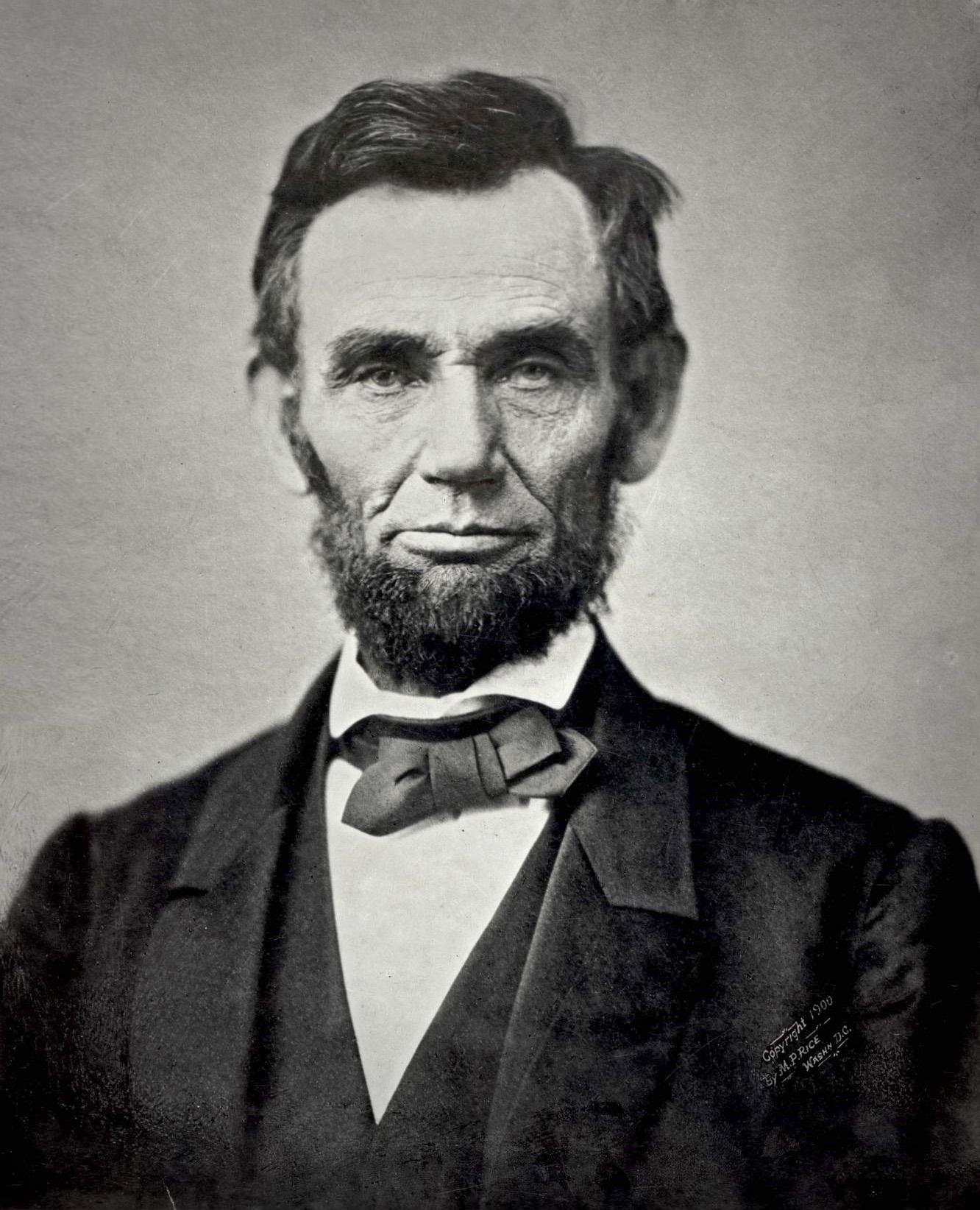
President Lincoln as photographed by Alexander Gardner in 1863.
Mr. Lincoln
Since
morality changes, as does what society views as acceptable or
unacceptable, to judge an individual on today’s standards often
isn’t justified, nor does it make sense. To be clear though, that
doesn’t mean people get a free pass because they lived 100 years
ago. But it does mean we should look at them in a different light. We
can’t simply retroject our views onto the past.
This
brings me to President Abraham Lincoln. Increasingly, Lincoln has
come under much more scrutiny, and at least in part, for good reason.
While at one time he was seen as this mythical hero of the United
States, and that view hasn’t completely vanished, increasingly, a
dark side of Lincoln has also come to light. For some, this dark side
is all that matters, and instead of a hero, he’s been recasted as a
tyrannical villain. But history is never so black and white.
To
be fair, Lincoln deserves a bit of both views. He led the country
through an incredibly difficult time period. He helped pave the way
for complete abolishment of slavery, and for greater equality of
black citizens. He helped unify the country, as well as better it
through things such as land grant colleges, which include most of our
public universities. And if you believe what you see in the movies,
he killed vampires.
But
for a good portion of his life, he was horribly racist. He oversaw
the largest mass execution in the country’s history; an execution
he signed off on. And he saw blacks as inferior, a point he was not
shy about when running for president. However, his views also changed
over time.
That’s
a key point. Lincoln changed over time. We all do. Our views evolve
as new information is introduced. And our views are also shaped by
the society in which we belong. To take one or two actions; a single
snapshot of history, and assume that is a good reflection of who
someone is, just doesn’t work. People are more complex than that.
Even
an event, such as the execution of 38 Dakota men, while a heinous
act, is more nuanced than just black or white.
Drawing of the execution of the Dakota 38 at Mankato, Minnesota, on December 26, 1862.
Dakota 38
In
August of 1862, an uprising by Dakota tribal members in Minnesota
began. It was in response to treaty violations and hunger, primarily.
To put it simply, the environment at that time was a tinderbox. For
six weeks, the Dakota War of 1862 waged on until the Dakota
surrendered at what later became known as Camp Release in Minnesota.
The uprising itself can be seen as justified. The United States had
violated treaties, which can be argued easily as a justification for
war.
United
States forces didn’t see it that way though. Just two days after the
surrender, a commission of military officers began trying Dakota men
who were accused of participating in the war. 392 prisoners would be
tried, and out of those, 303 sentenced to death and 16 given prison
terms.
However, earlier that year, in July of 1862, a new law
was passed that made it clear that the President would have to
approve any death sentences that came from military commissions. And
this is where all the gray area comes into play.
For
Lincoln, the easy route would have been to sign off on all of the
death sentences. That is what the people of Minnesota wanted, and
what the soldiers wanted. It is also what local politicians were
pushing for and in doing so, helped stoke a growing mob that was set
to implement vigilante justice if they didn’t get their way. Lincoln
was told, under no uncertain terms, that if he did not give the
orders for execution, the people of Minnesota, and possibly some of
the soldiers, would kill “all the Indians, old men, women and
children.”
In
December, he came to his decision. Only those who committed acts of
rape would be executed. After only discovering 2 men who were
convicted of such, he broadened the criteria to those who committed
massacres, making a clear distinction between those who just took
place in battles.
The
reason for this is one that would also largely be implemented at the
end of the Civil War. The goal was to not act in so much clemency, as
the fear was that it would encourage further uprisings. At the same
time, Lincoln didn’t want to act with so much severity that it would
be deemed cruel.
40
Dakota men would be convicted of this. One would immediately have his
death sentence commuted to ten years in prison, and a second would
later have his death sentence commuted.
It
is true that Lincoln could have commuted all of the 303 death
sentences. Instead, he commuted the death sentences of 264 men,
despite the intense pressure on him, and the very clear threat that
had been leveled if he didn’t do what the people of Minnesota wanted.
At the same time, while the Dakota justification for the war may be sound, not all of their actions can be excused. Rape, the killing of children and women, the killing of unarmed non combatants isn’t justified, on either side. Some 450-800 civilians, on the side of the United States, would be murdered during the war, which included children. To turn a blind eye, and paint all the actions of the Dakota as good, and all the actions of the United States as bad is a mistake and does no justice for the overall history. To put it simply, the entire incident is much more complicated then the black and white terms many try to paint it as.
Just as an aside, the decision that Lincoln made towards the Dakota, and the rationale behind it, also were in play with how the United States treated the South after the end of the Civil War. It isn’t uncommon for war tribunals to be held, and for people who went outside of the standard practices of war to be tried and imprisoned or executed.
As with the Civil War
After
the Civil War, this wasn’t an exception. Around a thousand tribunals
would be held after the War. The reasoning for such acts is simple;
they are to enforce the laws of war.
Like
the decision in the Dakota War of 1862, after the Civil War, leniency
was practiced. There would be prison sentences, as well as
executions, most famously Henry Wirz and a bit less famous, Robert
Kennedy. Champ Ferguson was another largely publicized execution
after the war, not to mention the many more executions during the war
(such as spurred on by General Order No. 252, in which Lincoln
promised to treat Confederate POWs in the same manner that Union
Black troops were treated when held as prisoners by the Confederates.
While Lincoln couldn’t keep the promise to the T, it did result in a
good number of executions as well as forced labor among Confederate
POWs).
The
decision was one of attempting to prevent another revolt by laying
down punishment, while not being so severe as to be cruel, because
reuniting and future peace was still needed. It was a fine line to
walk.
In
the end, history is much more complicated than the black and white
picture that it is often portrayed as. And we shouldn’t shy away from
that.
Abraham
Lincoln, the Great Emancipator who was also a colossal racist. He
fought for their freedom, or maybe that was a political stunt. And he
certainly didn’t think blacks should have the same rights as white
people. Except maybe soldiers. Well actually … eh its a bit
complicated. So let’s look at Lincoln and slavery.
As
with most people, Lincoln’s views changed over time. His views on
slavery and blacks in general were no exception. Unlike most people
though, his view evolved in a very public fashion, and because of
that we are left with a great deal of works that highlight his views
as they progressed.
The
problem with such a public evolution is that it becomes exceptionally
easy to cherry pick through his statements, and portray him in
whatever particular light one may want. With seeing things in black
and white coming natural, Lincoln is often regulated to either the
Great Emancipator, or a colossal racist, depending on the individual.
In
recent years, the pendulum has begun swinging more to the negative
side of the spectrum. Many historical figures, especially those with
a mythical standing, have seen similar fates. The mythology that
surrounds them has slowly been peeled back, and the person they were
is being explored. At times though, this causes an over correction,
where the person is rightly taken off of their pedestal, and then
unjustly pounded into dust. When in reality, the person generally
falls somewhere nearer to the center, with both their good qualities
as well as their bad ones.
Viewing
people in this manner, and painting a full picture is complicated.
And Lincoln is nothing but complicated.
It’s Complicated
One
thing that we can say about Lincoln is that his view on slavery being
immoral was rather early. According to Lincoln, he couldn’t remember
a time in which he didn’t think slavery was immoral. He grew up in a
family that opposed slavery, a family that attended a Separate
Baptists church, which was strictly opposed to slavery. Slavery would
also have a factor in his family moving from Kentucky to present day
Indiana, which was part of free territory.
As
early as 1837, Lincoln made his first public declaration against
slavery, as a 28 year old serving in the Illinois General Assembly.
Throughout his career, he would continue to speak out against
slavery. But then again its more complicated than that.
Lincoln
was no abolitionist. He found slavery morally wrong, but there was
also a problem, one that was quite large for Lincoln. Slavery was
sanctioned by the Constitution. The question that Lincoln faced, as
did many others, was, well what do you do about slavery then? In
1854, in his three hour speech in Peoria Illinois, he stated his
conundrum. He was morally, legally, and economically opposed to
slavery. But he admitted that in the current political system in
which he existed, he didn’t know what to do.
That
aspect of law was important to Lincoln, as can be seen in his legal
career. As a practicing lawyer, and an Illinois legislator, he would
be involved with a variety of cases involving slavery. Even though he
was open about his moral opposition to slavery, he found himself on
both sides of the issue with the clients that he represented. While
he found it morally wrong for a human to own another human, it was
still protected by the law, and it was his duty to abide by the law.
That’s
not to say that Lincoln didn’t try to work within the system for a
change. But then again, it gets complicated.
Lincoln
argued that when the founding fathers penned the phrase, “all men
are created equal,” that it applied to both blacks and whites
alike. But that didn’t mean he thought that they should have the same
political, or even social rights. In his fourth debate with Steven
Douglas, at Charleston Illinois, in 1858, he made it very clear what
his stance was on the matter. Douglas accused Lincoln of supporting
“negro equality.” Lincoln’s response, well simply, was racist:
“I will say then that I am not, nor ever have been in favor of bringing about in anyway the social and political equality of the white and black races — that I am not nor ever have been in favor of making voters or jurors of negroes, nor of qualifying them to hold office, nor to intermarry with white people; and I will say in addition to this that there is a physical difference between the white and black races which I believe will forever forbid the two races living together on terms of social and political equality. And inasmuch as they cannot so live, while they do remain together there must be the position of superior and inferior, and I, as much as any other man, am in favor of having the superior position assigned to the white race. I say upon this occasion I do not perceive that because the white man is to have the superior position the negro should be denied everything. “
Because of those views, Lincoln,
while finding slavery immoral, and wanting to abolish it, found the
best means to rid the United States of slavery completely was to have
the black population leave the United States and settle in either
Africa or Central America. It was the policy of colonization. It was
the view that his political heroes, Henry Clay and Thomas Jefferson,
also favored. Even up to August of 1862, as he was editing the
preliminary draft of the Emancipation Proclamation, Lincoln would
hold that view. In that month, he would bring together a delegation
of freed slaves with the hopes that they would support a colonization
play in Central America. He argued that because of their differences,
and the hostile attitudes of whites towards blacks, it was better for
both to be separated.
His argument didn’t go over very
well and sparked anger among both black leaders and abolitionists,
who argued that African-Americans were just as native to this
country, and because of that, deserved the same rights as whites.
Lincoln seemed to take the criticism to heart, and wouldn’t publicly
mention colonization again. He completely removed a mention to it in
an early draft of the Emancipation Proclamation.
However, colonization more dealt
with what to do after slavery ended; it didn’t really focus on how to
get rid of slavery. Lincoln believed, early on, that if slavery could
be contained, it would burn out. He also thought about possibly
repealing slavery gradually, and compensating slave owner for their
losses.
To put it simply, Lincoln had no
idea what to do about slavery. He campaigned actively against slavery
in Kansas. Vehemently opposed the Kansas-Nebraska act, of 1854, an
opposition that helped propel him on to a wider stage. He found
slavery to be morally wrong. But how to get rid of it, and what to do
with former slaves was not an easy question for Lincoln, and one that
took him a long time to figure out.
President Lincoln as photographed by Alexander Gardner in 1863.
Two Events
But we need to take a moment to
step back and look at two events that really helped Lincoln’s
evolution on the subject, and pushed him to work harder on the issue.
The first was the Dred Scott case in 1857. The case made it clear
that no black person, free or slave, could become a United States
citizen, and thus could not petition a court for their freedom. But
it went further. According to Chief Justice Roger Taney, and his
allies on the court, the federal government did not have the
authority to even prohibit slavery in the territories it ruled. More
so, Taney also rejected the idea that free states could give freedom
to the slaves who were within their borders.
With the huge conquest of Mexican
territory in the Southwest, the country had grown considerably, and
because of that, coupled with Taney’s new doctrine via Dred Scott
case, there was fear that containing slavery would be impractical,
and thus it would continue strong. Joining the Republican party, the
central point that Lincoln believed the new party should organize
around was the opposition to any expansion of slavery, and by doing
so, choke off the institution, and hopefully alter the balance
between slave and free states so that the Constitution could be
amended, and slavery be abolished. It was a long game for Lincoln.
In 1858, Lincoln would take this
view to the public, when he accepted the Republican nomination to run
for the United States Senate, against Stephen Douglas. Even though at
the time, the public did not vote for senate members (instead they
were elected by the State legislature up until 1913), Lincoln and
Douglas took their fight to the public with the now famous
Lincoln-Douglas debates of 1858.
Lincoln would cite the Dred Scott case by name, and it was that ruling he had in mind when he made one of his most famous speeches:
“A house divided against itself cannot stand. I believe this government cannot endure, permanently, half slave and half free. I do not expect the Union to be dissolved. I do not expect the house to fall. But I do expect it will cease to be divided. It will become all one thing or all the other. Either the opponents of slavery will arrest the further spread of it, and place it where the public mind shall rest in the belief that it is in the course of ultimate extinction; or its advocates will push it forward, till it shall become lawful in all the States, old as well as new — North as well as South.”
As pointed out before, Lincoln
would say some racist things during those debates, after being
accused of supporting “negro equality,” but he also made clear
his view:
” I have never said anything to the contrary, but I hold that notwithstanding all this, there is no reason in the world why the negro is not entitled to all the natural rights enumerated in the Declaration of Independence, the right to life, liberty and the pursuit of happiness. I hold that he is as much entitled to these as the white man. I agree with Judge Douglas he is not my equal in many respects — certainly not in color, perhaps not in moral or intellectual endowment. But in the right to eat the bread, without leave of anybody else, which his own hand earns, he is my equal and the equal of Judge Douglas, and the equal of every living man. “
Lincoln would loose the senate
election, but the Dred Scott case would remain the center of both
constitutional and historical debates. It would also push Lincoln
further, and helped lead to his election, and the Civil War.
This brings us to the second major event that helped shaped Lincoln’s evolution; the Civil War. While the Civil War was never fought to abolish slavery, slavery was intimately tied to it. In their declarations of cessation, all of the states that left the Union made it clear that slavery was at the forefront of the reasons. Because of that, from the very beginning of the Civil War, the Union was forced to deal with the issue of slavery. As slaves fled the Confederate States, the question the federal government was faced with is what are we to do with these people? The solution was that the government was going to treat them as if they were free, because they weren’t going to send them back.
This also opened up the Army to
the enlistment of black men, and for Lincoln, that move, that blacks
were fighting to keep the country together, made him promote at least
partial suffrage; that black men who served the country deserved the
right to vote. But it was more than just the right to vote that
changed with Lincoln.
With the Civil War, and slaves
running towards Union lines, the question of slavery was on the
national agenda and had to be dealt with. With black men joining the
fight to help preserve the Union, as Lincoln saw it, it really was a
stimulus for him to begin changing his racial attitudes, and to see
America as more of an interracial society.
That
was never Lincoln’s intention for the war though. His goal was imply
to save the Union, and do so in the shortest way possible as provided
by the Constitution. As he wrote to the New York Tribune editor,
Horace Greeley, “My
paramount object in this struggle is to save the Union, and is not
either to save or to destroy slavery. If I could save the Union
without freeing any slave I would do it, and if I could save it by
freeing all the slaves I would do it; and if I could save it by
freeing some and leaving others alone I would also do that.”
In
closing the letter though, he made a clear distinction: “I
have here stated my purpose according to my view of official duty;
and I intend no modification of my oft-expressed personal wish that
all men every where could be free.”
It
was his duty as president that he had to stick with, regardless of
his own personal feelings. That duty, for Lincoln, dictated that he
preserve the Union.
But
this did set the road to emancipation and allowed for the abolition
of slavery.
One
of the first steps towards this was the Emancipation Proclamation.
Largely, it was a military tool. It didn’t technically free any
slaves, but did two other things. First, it undermined the
Confederacy. The Emancipation Proclamation would only really go into
effect when the south was defeated and rejoined the union. At that
time, slaves in those states would be free. It gave hope to slaves
living within the Confederate states that they could be free. Now,
this didn’t extend to slaves in the border states that didn’t go to
war, or even in areas of the Confederacy that were already under
Union control.
The
proclamation changed fundamentally the nature of the war, and turned
it into a war for freedom. This had a secondary effect, where it
prompted a greater exodus of slaves out of the south, and into the
Union. And with that, Lincoln provided a new source of manpower. He
allowed the liberated to then become the liberators.
A color slide depicting John Wilkes Booth just before he assassinated President Lincoln.
Times Change
As
the war ended, the question of slavery still loomed large though. It
was partially abolished, but it still hung in somewhat of a limbo.
Before the war, changing the Constitution in order to allow the
abolishment seemed like an impossibility. There was no way a
Constitutional Amendment would have passed pre-Civil War, and thus
the end of slavery would have been a long drawn out process.
With
the war though, the south took themselves out of the equation. At the
end of the war though, Lincoln knew he had to act quick, and that in
order to end slavery, he would have to follow the Emancipation
Proclamation with a Constitutional Amendment.
Before
the south was restored into the Union, the 13th
Amendment was proposed. It was thought that its passage would be
quick and easy through Congress. But the House threw a wrench into
the mix. For Lincoln though, the issue was of tantamount importance.
The country had the ability to abolish slavery, and he took it upon
himself to ensure the passage of the 13th
Amendment. He insisted it become part of the Republican platform for
the upcoming Presidential election, and his efforts would finally be
met with success. In January of 1865, the 13th
Amendment was passed, and it would be followed up by the 14th
and 15th.
Now
clearly, Lincoln wasn’t an untarnished hero, a mythical figure. He
was flawed and had some very racist views. But as we have seen, he
was also a complicated figure who held complicated beliefs. He was
wholly human. He, as most people, existed within a lot of gray area.
And that is all without mentioning that he grew up in a very
different time, with very different ideas. Which we have to factor
in. But in the end, for all of the good and the bad, he struggled to
do what was right. His views may not always have been morally sound
in today’s opinion, nor were all of his actions. But it also doesn’t
make him a monster, and it certainly doesn’t take away from the very
important contributions he made.