It’s true that computers have really evolved over time. But the evolution they show really isn’t accurate. A phone, which is somewhat of a computer, really isn’t the end all. My main computer is still quite large, and while I built it myself, it still falls far short of some of the supercomputers out there.
When speaking of supercomputers, some of them are still the size of a full room. So the meme is trying to make a point by being purposely dishonest.
This dishonest goes further as energy is much different that what they propose. Yes, oil is still a form of energy. We still have coal power plants. But we are increasingly moving towards solar and wind power, as well as hydroelectric power. There is a new push for nuclear energy that is highly effective, clean, and could be a massive game changer.
I’ll have a video coming out about this later on as well, but it’s dishonest to ignore that energy has changed over the years.
First, evolution isn’t anti-Christian, nor did Darwin think it was. He instead stated that one could be an ardent Theist and an evolutionist. This is a view that many Christians take today.
The whole conversion to Christianity on his death bed comes from one Lady Hope. Lady Hope probably never met Darwin, was not there at his death bed, and his kids completely reject the story, as do most historians.
Darwin was more of an agnostic in the last years of his life. His belief slowly slipped away during his life, but he ended up as an agnostic.
Really, this again is an appeal to authority, and one based on a false narrative.
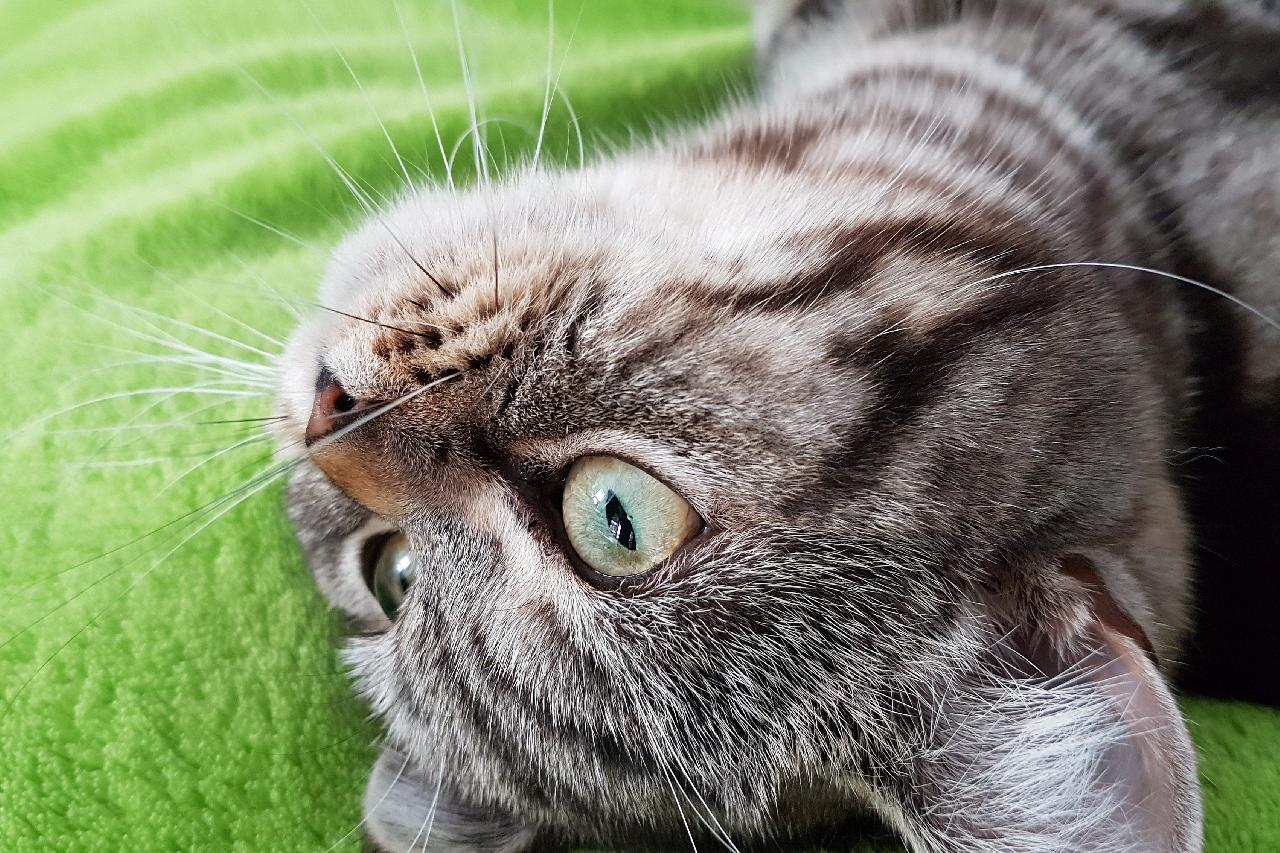
They weren’t. So probably not the answer you were looking for. But a recent study, that is really just expanding on what other studies have suggested, cats were never truly domesticated.
The study, published in 2017, titled: The palaeogenetics of cat dispersal in the ancient world, argues that cat DNA has changed very little over the millennia, with one distinct exception, the coloring pattern of the tabby. Even this exception though didn’t occur until the Middle Ages.
This wasn’t the first study that showed that basic idea. In 2013, another study titled The tiger genome and comparative analysis with lion and snow leopard genomes discovered that tigers and house cats shared 95.6% of the same DNA. This study said that they had diverged almost 11 million years ago.
Going back to the 2017 study though, what it related was that it was probably around 8,000 years ago that the cat started hanging around farming communities, and from there, got closer to humans because food was easier to get to. Basically, it was a mutually beneficial relationship, because with farming communities, you have more rodents, which gives cats an easy meal, thus ridding the farmers of the pest.
From there, the cat really spread, seemingly following maritime and terrestrial trade routes. Again, this was most likely mutually beneficial as the cats would continue to keep rodents and other pests out of the trade goods, either in a caravan or ship. This was especially true in regards to shipping routes, as the researchers found Egyptian cats, for example, in Viking areas. In other words, cats were appearing in places they shouldn’t be, and that led the researchers to conclude that they were catching a ride.
The study suggested that cats became “domesticated” mainly because cats just hung around, and domesticated themselves. However, they also make it clear that domestic cats and wildcats remain nearly identical. The big difference is that house cats are more tolerant. Part of this also is because, as the study argues, there was no need to try to change cats, as they were seen nearly perfect as they were. Unlike dogs, they weren’t selected to perform different tasks, and thus we don’t see the diversification in cats that we do in dogs.
So in many ways, it seems more like cats have befriended humans, instead of being domesticated.
Using anger and screaming is a way a narcissist tries to manipulate a person. Similar to a cat screaming when backed into a corner, or confronted with danger.
Growing up, my brothers and I were
manipulated by our birth mother. We are not necessarily different in
that. Many of us are manipulated at some point in time, and if you
have a narcissistic person in your life, manipulation is a common
ordeal.
Among us brothers, some of us broke
away from the manipulation sooner than others. The youngest of us was
the first to break away from our birth mother, and I, the oldest of
us three, was the last. But even breaking away from the person
doesn’t stop the attempts at manipulation. If you can spot them
though, you can reduce, or prevent their effectiveness.
One of the problems with manipulation
is that we are geared to be effected by it. Generally, we are more
prone to trust others, and at the same time, we have a tendency to
believe that we can’t be manipulated. This in itself opens us up to
manipulation. This can lead some to distrust everyone, which doesn’t
prevent manipulation, and over the long run, isn’t healthy.
So how do you figure out someone is
trying to manipulate you? Part of it is catching the individual in
their lies. For me, that was easy as our birth mother admitted to
being a compulsive liar. While we all could see some lies from time
to time, having her admit that she was a compulsive liar made
everything she said questionable. Here’s the thing though, even her
admitting that she is a compulsive liar was a form of manipulation.
This may seem counter intuitive, but it comes back to our innate predisposition to believe others. By her admitting that she is a compulsive liar, she is admitting a fault, and revealing the truth. At the same time, it’s accompanied by a promise that they will work on that. It’s meant to bring you in, and form a trust for them, as they are revealing a secret. It’s a small bit of truth, enough to pull you in, and not question them. For our birth mother, it had the opposite effect, and could be seen more as a last ditch effort on her part.
Another common tactic of manipulators
is to pull on your emotions. Crying, acting in a panic, and even
yelling can all effect your emotions, and by effecting your emotions,
it becomes easier to manipulate a person as you’re preoccupied. It
gets you to let your guard down, and once it’s down, it’s easier to
manipulate.
Part of the intimidation process is trying to keep a person quiet, and silenced.
This can eventually also lead into
somewhat of a good cop bad cop scenario, where the person acts as if
they are understanding, and then launches into anger, or into crying,
and then comes back to understanding. It plays with your emotions by
spiking them, and then giving you relief, only to spike them again,
which makes a person much more susceptible to manipulation as the
emotional and even physical toll on a person wears them down, making
it more difficult to fully process everything going on.
This sort of tactic often comes out
when the person is beginning to be found out. For our birth mother,
she would use this when she was confronted. When I finally broke the
ties, she did everything from admitting that she was at fault, to
then threatening to sue me, to harassing my wife, to screaming
obscenities.
Once you know there is manipulation going on
though, it become easier to combat it. With a narcissist, it can
often be a bit easier to spot it as well because they have such a
high view of themselves, they see themselves as intellectually
superior, and thus they see others as inferior. This often reminds me
of Michael Scott from the TV show The Office, where he attempts to
use reverse psychology. It’s clear to everyone else what he is doing,
but he believes he’s outsmarting others.
From our birth mother, we’ve seen it
quite often, especially since we started this page. Her tactic is to
make it appear as if she likes the fact that we created this page and
are speaking out, because it supposedly is helping her obtain
evidence that she will never show anyone. Yet we know that isn’t true
because actions speak much louder and she often reacts in anger,
which ends up showing what she truly thinks.
The goal of this sort of “reverse
psychology” is to make it seem as if speaking out, and exposing the
narcissist for who they are, is actually helping them, so you might
as well stop because it’s only hurting you. But the truth of the
matter is that the person is just trying to silence you. They want
you to be quite so that you don’t continue pealing away their lies.
Other forms of manipulation comes in
terms of intimidation. Threats of lawsuits, or threats of exposing
evidence are quite common. But the threats are almost always hollow
because the narcissist, or manipulator, doesn’t actually have a foot
to stand on. In our case, we’ve been waiting for the damning evidence
or court case for almost half a decade. It will never come though
because it doesn’t exist, but it’s meant to be intimidating.
Being aware that manipulation is going
on though is key, and once you realize what it is, you can combat it.
I grew up thinking that I had a high
tolerance to pain. The older I got, the more tolerance I thought I
had. Part of that reason is that I try not to complain about pain. I
don’t seem to have the same reactions as many do to pain. So in my
mind, it meant that I dealt with pain in a better manner, and thus my
tolerance was higher.
Lately though, I’ve been dealing with
increasing amounts of back pain, which stems from me missing a
portion of a disk in my back. So I decided to see if there was a
relation between pain tolerance and autism, as that is a new standard
that I simply do.
It turns out that I was wrong though.
The manner in which many people who have autism deal with pain is
different from those who don’t have autism. But they still feel that
pain, and sometimes more so than others. It’s not just physical pain
that is effected by this though, but the entire perception of pain
can be different.
Now, not everyone who has autism is
hypersensitive to pain. Even if they are hypersensitive to one form
of pain, it doesn’t necessarily mean they are hypersensitive to all
types of pain. Conversely, some with autism are hyposensitive, and
they experience one or multiple types of pain less. Simply, it’s a
bit of a mess when talking about pain perception and people with
autism. This gets more complicated when other issues are put into the
equation, such as various disorders that are more associated with
people with autism.
When autism was first defined, it was
believed that they didn’t feel pain. That was because those being
studied were observed doing things like going outside naked and
rolling around in the snow. They seemed impervious to both heat and
cold. And often, when inflicted with pain, they didn’t show the
common signs of pain. That view has changed, but studies still show
that children with autism are often not given the same sort of
attention that non-autism kids are because they don’t show that they
are in pain, or they can’t communicate what they are feeling
effectively.
That is one of the big points too; that
people with autism often lack the communication skills they need in
order to effectively let others know how they feel. They don’t talk
about it as others would. Their facial and body expressions often
don’t get the point across.
There is another thing at play though.
New studies are being done that are really looking at pain perception
in people with autism. One recent study compared brain imaging of
people who have autism, as well as others you did not, while they
were feeling pain. The study was relatively simple in that the
individuals would undergo an MRI while they had a piece of metal
strapped to their leg that would be heated up to a point where it was
painful, but not damaging.
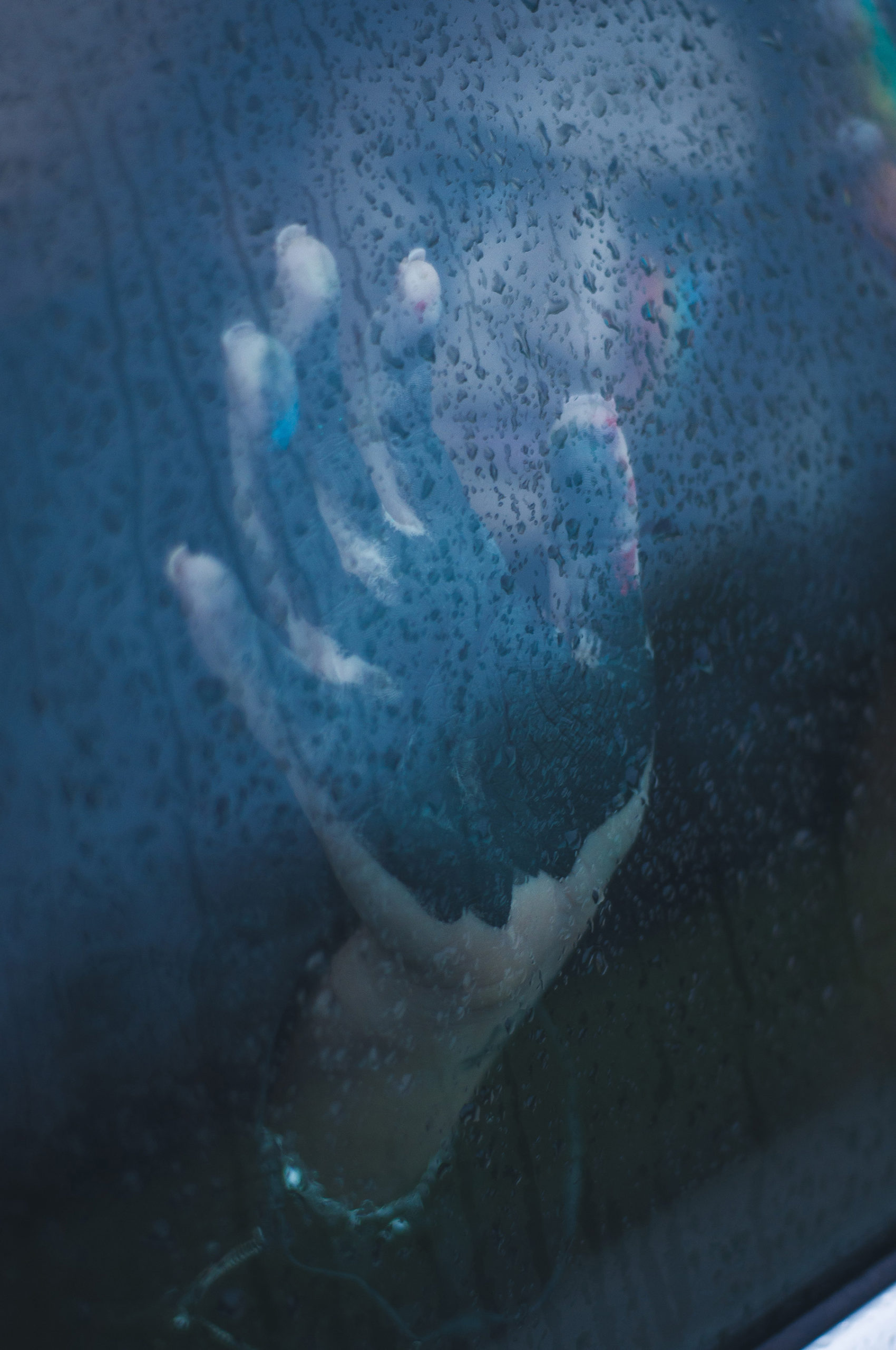
Treating pain for someone with autism can be difficult as they may not know how to properly communicate their pain.
What the researchers found was that
both participants had the same area in the brain light up, an area
associated with processing pain, as the heat was beginning to ramp
up. But while the participant’s brain who didn’t have autism would
continue to be lit up, the brain with someone with autism would go
dark. The way that the brain handled pain was simply different. These
studies will need further research, as it is relatively new, but it’s
showing that someone who has autism has a brain that simply works
differently.
But it gets more complicated than that
as well. It’s not just physical pain that is perceived differently.
This can be even what most would consider an annoyance. One
researcher who is making breakthroughs in this field has autism
himself, and he describes that when he was young, his mom would
vacuum the floors, and it would set him off. It was too much. He
eventually learned to deal with this, but it resulted in him becoming
numb.
The reason for that is that he was
hypersensitive to noises, and to other stimuli, as many people with
autism are. This is complicated in that people with autism often have
a hard time distracting themselves, and instead they focus on the
annoyance, which intensifies it.
All of this means that people with
autism have to be treated differently from a medical standpoint,
while they also have to use different ways to cope. And that is all a
learning experience.