Category: History & Culture

Exploring the past, the people who shaped it, and the ways history continues to influence our world.

  • Support of Israel: Jews after the Holocaust.

    Support of Israel: Jews after the Holocaust.

    I support Israel. Well, kind of. The truth of the matter, and most matters in general, is that the Israeli-Palestinian conflict is much more complicated than it is often portrayed. And to really delve into that complication, we have to place it into its proper historical context.

    That historical context is vast though. It also encompasses an incredibly misunderstood portion of human history; WWII and specifically the Holocaust. Regretfully, the distance between us today, and that horrific past has done us no favors, with the motto of “Never Forget” changing to “just get over it,” or “that’s distant history, you just have to move past it.” Yet, even today, the Jewish population has never recovered.

    Even more so, Judaism, the religion of Jews, and a key component of their culture, was forever, and fundamentally, changed due to the philosophical implications of the Holocaust. Beyond that, even after the Holocaust was over, it wasn’t really over.

    By placing this entire conflict into perspective, and placing Jewish history into context, what we see is that while the war was won, the anti-Semitism, and the genocide continued, with Nazis continuing to stay in power, and with Jews being slaughtered.

    But before we even get to the Holocaust, and finally the creation of the state of Israel, we need to go even further back.

    The Jewish Question

    The history of the Jewish people is one largely of subjugation and expulsion. Historically, Hebrews, and later Jews, never had significant power. While there would be a short lived United Monarchy, followed by the two kingdoms of Israel and Judah, these nations would never be of major strength. For the most part, they would be a footnote in history, with their largest importance really being a buffer zone.

    During their short lived period of sovereignty, they would face constant threats, such as by the Egyptians, and later, domination at the hands of the Assyrians and Babylonians. They would also face exile and deportation. While some inroads would be made back into Palestine, later expulsions would center the Jewish community in Europe.

    During the Middle Ages, the core of the Jewish community was centered in Europe, but that didn’t stop the expulsions. Throughout Europe, they would continue to face expulsions from places such as England, and Spain, as well as pogroms throughout the Russian Empire, not to mention the massacres and anti-Semitism that would occur throughout the continent.

    Now, there is a lot of history here, which would take volumes to cover. The key point though is that the Jewish community had a history of being expelled, of being persecuted and having to relocate. While peace, or at least periods of less hardship could be found, much of the history is filled with persecution. For our purposes, we can jump to around 1753, with the coining of the term, the “Jewish Question.”

    The Jewish Question was first posed in Great Britain in regards to debates surrounding the Jewish Naturalization Act of 1753. Briefly, the Jewish Naturalization Act would have allowed Jews to become naturalized citizens of Great Britain, and was largely a reward for the loyalty to the government that the Jewish community had shown during the Jacobite rising of 1745.

    The Bill was quickly rescinded though after an enormous public outburst of anti-Semitism broke out. Over the course of almost two centuries, the question would crop up time and time again when dealing with Jews, who seemed to pose a singularity as a people, against a growing trend to nationalism among various states.

    Various solutions to this question would be posed by different governments, ranging from expulsion, to widespread pogroms and ethnic cleansing, especially in Eastern Europe, to segregation, such as forcing Jews to only live in what would become known as the Pale of Settlement in the Russian Empire.

    This increased persecution, and the rise of anti-Semitism in general, led many in the Jewish community to try to find a solution themselves. This would give birth to organizations such as the Jewish Colonization Association, which helped Jews flee Europe by setting up colonies where they could, including in South America and Palestine. It would also give rise to the modern Zionist movement in the mid and late 1800s.

    On the other hand, at the same time that Zionism was being formed, Arab and Palestinian Nationalism were also rising in popularity. This rising nationalism would form a foundation for the later Israeli-Palestinian conflict.

    While Jews had lived in Palestine for generations, the rise of both Zionism and Arab Nationalism made for an incredibly shaky relationship. Zionism was seen as a threat among the Arab leaders in Palestine, and with a growing influx of Jews into Palestine, that threat was met with violence.

    This would only worsen with Germany’s solutions to the Jewish Question. With the situation worsening in Europe, the demand for Jewish immigration had grown considerably. It would be met with an increasing difficulty though. Places, which were once safe havens, such as the United States, Brazil and Argentina, were restricting passage for Jews fleeing from Europe. This would lead to Jews instead fleeing to the Middle East, including Palestine, in much larger numbers.

    The mass exodus of Jews from Europe also coincided with the initial solution that Nazi Germany had for the Jewish Question. Deportation was a central idea, to begin with. But as Germany’s goals increased, for them, it became clear what the answer was to this Jewish Question. They developed the Final Solution.

    Genocide

    Often, when we think of the Holocaust, and the acts of Nazi Germany, we want to see it as an isolated event. That what the Nazis did existed in a bubble. The truth is much less clean and tidy. What the Nazis did, what the Holocaust symbolized, was just the next step in an evolutionary process. The Nazis were able to achieve, at least in part, what others had already attempted. What made the Nazis stand out, and allowed for the Holocaust, was the industrialization of the killing process.

    Ethnic cleansing of Jews was widespread. Russia led this sort of atrocity, but Eastern Europe in general was guilty of such actions. In places like Poland, pogroms grew to be more regular, which increased the mass exoduses from those areas.

    With the rise of the Nazi party, and the development of the Final Solution, those ethnic cleansings, and atrocities, were conducted on a much larger scale. And this time, they were done with an efficiency that had never been seen before. Genocide was turned into a science, and Germany had everything it needed to conduct it on a mass scale.

    While the Holocaust would begin in Europe, Hitler’s intention was to fully exterminate the Jewish population. In 1941, Hitler met with Amin al-Husayni, a Muslim leader in Mandatory Palestine, and promised that Germany would also eliminate the Jewish foundations in Palestine.

    During WWII, Jews in Palestine were surrounded by pro-Nazi regimes. Arab leadership in Palestine had made ties with the Nazi Party as far back as 1936, and the Vichy regime in control of Syria and Lebanon were both pro-Nazi. This would lead to two major fears of German invasion into Palestine.

    The first was from the north, with the Vichy regime, but was squashed by the allied invasion on June 8, 1941. The more serious threat has become known as the 200 days of dread.

    In 1942, the German Afrika Korps, under the command of Erwin Rommel, was posed to overrun British possessions in the Middle East. As part of the invasion, Einsatzgruppe Egypt had been commanded to carry out systematic mass killings of Jews in both Palestine and Egypt.

    The 200 days of dread would eventually come to an end after the Allied victory in the Second Battle of El Alamein, which halted the Axis from advancing further into Egypt.

    By the end of the war, it’s estimated that 6 million Jews had been murdered. That’s around 60% of the Jewish population in Europe. Even as the Allies closed in on the Nazis, and on Hitler, the slaughtering of Jews did not cease. If the Nazis were going to lose the war, they were going to still kill as many Jews as humanly possible.

    After the War

    For many of us, we imagine that once the Allies liberated the Concentration and Death camps, Jews were free to go home in peace. The truth couldn’t be further from that depiction.

    In Poland, as Jews attempted to return, anti-Jewish riots broke out in numerous cities. In Kielce, during July 1946, 150 Jews tried to return home. Fearing that hundreds more would return to reclaim their belongings and property, a pogrom broke out. 41 Jews would be killed, and 50 more wounded. It was clear that returning home wasn’t an option.

    Many Jews would remain in their concentration camps, which had been turned into displaced persons’ camps. There they would wait until they could find a new country to call home, but much of the world didn’t want them. And to add insult to injury, in many of these camps, it was the Nazi soldiers who were often put in control over the populations.

    While we would like to think that after the war, the Germans realized their mistakes and tried to change them, the fact is that little really changed. The Germans knew of the severity of their crimes against humanity, so much so that when the liberating armies were approaching, they attempted to destroy as much evidence as possible.

    Today, when visiting Germany, few depictions, statues, and forms of honoring of the Nazis remain. However, this wasn’t by choice for the Germans; it was forced upon them, a condition of their defeat. The country would have a superficial face lift, erasing the crimes of their past. But when it came to the inner structure, things continued as they had.

    Few Nazis would be tried and convicted of their crimes. Even if they had been brought before the country’s judges, it wouldn’t have matter as many of those judges were Nazis themselves. The rampant anti-Semitism continued to exist as it had before, and throughout Europe, it was clear that there was no safe refugee.

    For years, these Holocaust survivors were stuck in these camps where they had seen so much death and destruction. There was no place to go as no one would have them. Hundreds of thousands of Jews, who had been rounded up to be slaughtered, were now stuck in limbo. This limbo would last for many of them until 1948.

    Finding a Home

    While Jewish colonies had been set up around the world prior to WWII, growing anti-Semitism made virtually all of them unsuitable. Mass exoduses to South America among the Jews had produced a number of flourishing communities in places like Argentina and Brazil, as the War approached, the area became increasingly less hospitable. And after Germany’s defeat, these countries would become safe havens for Nazis fleeing Europe.

    Even in the United States, where Jewish communities now thrive, it would take years after the war for them to open their borders to receive these displaced Jews. Sadly, before the United States would open their doors to Jews who survived the Holocaust, they had already been welcoming Nazis they deemed important, giving them a new home.

    With the tragedy that had just fallen upon them, centralizing Jews into a stronger area, an area they could be unified and have some control over, became much more important. The United States was an option, once it opened up, but for many it wouldn’t be enough, as the country could always turn on them. And Jews knew the ramifications of that.

    Palestine became the leading solution for many Jews; really the only plausible solution. While Palestine was their ancestral home, it also had a sizeable Jewish community. It was also part of the now defunct Ottoman Empire, and was a League of Nations mandate, which became a United Nations mandate.

    Part of Mandatory Palestine was the Balfour Declaration of 1917, in which the British had promised support of a Jewish national home. Because of that, discussions about establishing a homeland for Jews had been discussed for decades leading up to the 1947 partition. In a special session, the UN General Assembly voted to partition Palestine into two states; one Jewish, one Arab.

    Virtually as soon as the Resolution had been approved, attacks were performed by Arab irregulars against the Jewish population of Palestine. Reprisals, and counter-reprisals would continue, with thousands being wounded or killed.

    When the termination of the British mandate ended, and Israel declared Independence, an all out war broke out. It would become known as the First Arab-Israeli War, which erupted on May 14, 1948. During the next couple of days, Jordan, Syria, Egypt and Iraq, followed later by Lebanon, would join the Palestinians.

    The purpose of the Arab armies was largely the same as what Hitler proposed; extermination. For the Jews, fearing another Holocaust, their initial goal was survival. They had anticipated an Arab invasion, and hoped that their preparations would be enough to prevent annihilation.

    That goal would later expand to expanding the Jewish state beyond the borders assigned by the UN partition agreement, in order to both incorporate isolated Jewish communities, but also add more territories to their state in a way that would give them easier to defend borders.

    The war waged on for 10 months, and after it was over, around 750,000 Palestinian Arabs would be expelled, or had fled, the area. At the same time, about 850,000 Jews were expelled, or fled their homes in Arab countries. Many of these individuals would be able to find a home in Israel, but hundreds of thousands would have to find a new home elsewhere.

    For those Palestinian Arabs, their situation was much more tragic. Most remain refugees, and continue to live in refugee camps. Neighboring Arab states would deny them, or their descendants, citizenship. In 1949, Israel did try to offer a partial solution, by allowing some, who had families in Israel, to return home, to release refugee accounts, and to repatriate 100,000 refugees, but the Arab states rejected any sort of compromise. As far as they were concerned, Israel didn’t exist, and thus they would not do anything that might give them recognition as a state.

    Those Arabs who had remained in Israel would eventually be granted citizenship, and finally the same rights as Jewish citizens, but it was a long road.

    Continued War

    For nearly two more decades, conflict would continue, with violence being instigated on both sides. The major threat to Israel though would be Egypt.

    Having gained control of the Gaza Strip, during the previous war, Egypt aided Palestinian attacks from that area. They would also begin amassing a large troop on the Sinai Peninsula. With the threat increasing not only from Egypt, but other neighboring states, Israel launched a preemptive strike that would result in the Six-Day War.

    Following the war, Israel had succeeded in claiming the entire area that was once the British mandate of Palestine. It also led the Arab nations to form the “three no’s;” no recognition, no peace, no negotiation with Israel.

    There would also become an increase in the activity of the Palestinian Liberation Organization, the PLO. Founded in 1964, a primary goal of theirs was to establish a Palestinian state within the entire area that was under the British mandate, as well as to purge Zionists from Palestine.

    The PLO would be founded in armed struggle, believing that it would be through force that their goals would be accomplished. However, since 1993, they have now recognized the right of Israel to exist, and have officially rejected violence and terrorism. Terrorism did continue, and in 2018, a segment of the PLO has once again called for the destruction of Israel, rejecting their right to exist.

    However, for two and a half decades, the PLO would wage a terrorist campaign against Israel. This campaign would also be fueled by the Soviet Union, both through training PLO members on covert bombings and plane hijackings, as well as by releasing propaganda, such as the The Protocols of the Elders of Zion in Arabic, to help fan the flames of discontent.

    In this environment, two more wars would be fought. The Yum Kippur War, initiated by Syria and Egypt, as well as the 1982 Lebanon War, initiated by Israel against the PLO who were stationed there.

    Attempt at Peace

    Multiple attempts at peace would be had, with one of the most promising being the Oslo Peace Process. Both the PLO and Israel agreed to work towards a two-state solution, but negotiations would fail. From 1993-2000, talks would occur even though attacks were being conducted by both sides of the conflict.

    In July of 2000, the talks would finally come to an end, after Yasser Arafat, the PLO leader, rejected a possible agreement, without making a counter-offer. Peace talks would halt, as violence was rising.

    A new uprising broke up, which continues even now. Increased terror attacks against Israeli civilians led to Israeli troops to begin conducting more regular raids and arrests. Multiple attempts at peace would be made during this time period, with even the Arab League trying to find a suitable solution.

    However, with steps forward, drawbacks continue to be had. In 2002, the West Bank barrier was constructed, which helped reduce suicide bombings and other attacks across Israel by 90%. But the barrier has also been met with serious issues, as much of it was built within Palestinian territory, as per the 1948 Green Line. Right-wing and ultra-conservative groups within Israel have also objected to many of the peace solutions.

    The death of Yasser Arafat also provided a major blow. Upon his death, it was revealed that he had received billions of dollars in aid from both foreign nations and other organizations, but much of this money was never used to develop Palestinian society. On a yearly basis they were receiving almost 2 billion dollars, with close to 10 million in total assets.

    This controversy eroded much of the remaining faith that Palestinians had in the organization, and it gave the Hamas a growing support, who did not recognize Israel’s right to exist.

    In turn, this led Israel to cut off negotiations with the Palestinian Authority, which was controlled by the Hamas, as they couldn’t negotiate with an organization that was intent on wiping them out.

    The Situation Today

    The current situation in Israel is multi-faceted, and surrounded by difficult history. To put the blame on one side ignores all that history. To pretend that the situation is an easy solution ignores all that history.

    For half a century, Israel has faced threats not only to their existence, but attacks on their citizens from people who refuse to recognize their right to exist. In turn, they have aggressively defended themselves, because they know what happens when they don’t. Their need for sovereignty, for them, is a matter of life and death, which the Holocaust made very real for them.

    With the Palestinians, hundreds of thousands were expelled or had to flee from their homelands. Some of those exoduses were fueled by the promise that they would be able to return home after the Jewish presence was eradicated. But today, that has left many of those individuals as refugees. However, we also can’t ignore that those countries that supposedly came to assist them then also left them without any support when they lost, and sabotaged potential help from Israel because of their refusal to accept their right to exist.

    For those Palestinians who have remained, they also face the threat of their lands being encroached on, as mass influxes of Jews into the country has led many looking for areas to expand. While Israel, at times, has tried to restrict this encroachment, they simply haven’t succeeded.

    Today, by far, Israel is the stronger force there. They were a nation forged in war, formed in horrors, that they don’t want to repeat. It makes for a mighty nation, but not one that is always fair or kind. Palestine, on the other hand, has a legitimate reason to be angry. They had promises made to them, which in part led to hundreds of thousands becoming refugees and their lands taken. Those who would lead them have done so through violence, and often terrorism, thinking it’s the only option. Which only continues the cycle of violence.

    Neither side is innocent, but neither side is fully to blame either. It’s a complicated situation, that needs nuance. And that nuance has to be rooted in some historical knowledge.
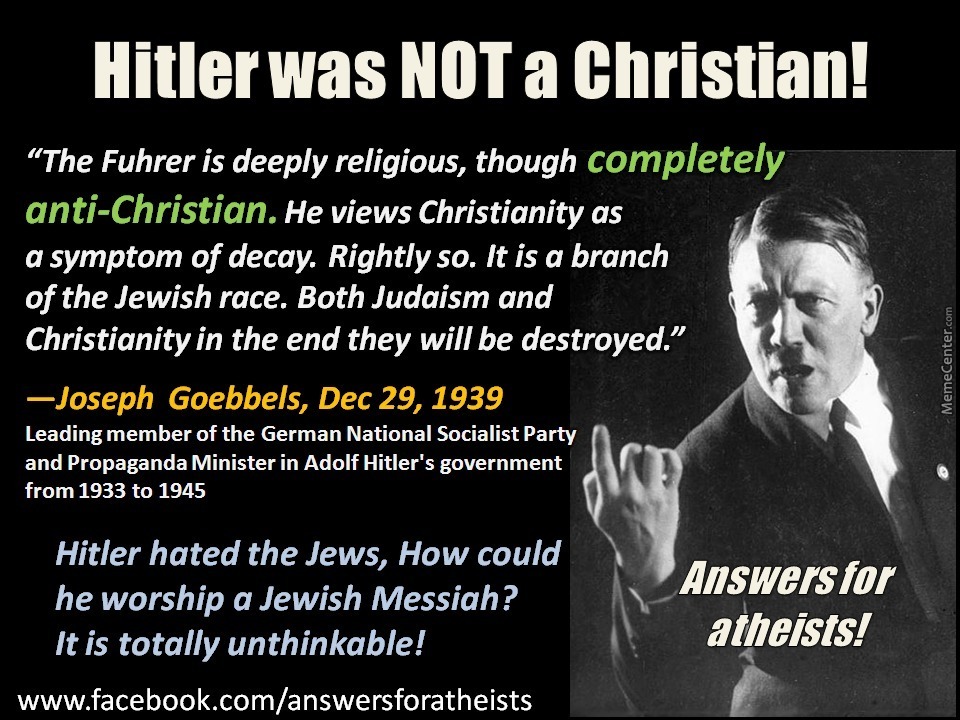
  • Hitler wasn’t a Christian, nor was he an Atheist.

    Hitler wasn’t a Christian, nor was he an Atheist.

    Terrible. Both Christians and atheists have this fascination of claiming Hitler was on the other team. And they do this by taking things out of context, and then by ignoring everything that disagrees with their view.

    Let’s break this down. Hitler wasn’t a Christian. He was definitely anti-Christian. He was more of a pagan. He actively persecuted Christians as well as the Catholic Church. He detested Christianity.

    But he wasn’t an atheist either. He was a theist, but he took on a pagan stance.

    While he was rising in power, and even in the Mein Kampf, he did claim to be a Christian. But as the Nazis took power, they started promoting what was called positive Christianity, which really stripped Christianity of it’s foundations. Positive Christianity denied that Jesus was divine, rejected the Jewish elements of the religion, including the Old Testament, and even pitted Jesus as an Aryan fighter who fought against Jews.

    Hitler did agree to a Reich concordant with the Vatican, but it was more of  a show than anything else, as it generally ignored it and persecuted the Catholic Church anyway.

    Hitler also didn’t like atheists though. He found them to be uneducated. But really, Hitler was infatuated with occultism, and had a belief in some sort of god that often was conflated with nature. So he was religious in some sense.

    As for the last statement, many Christians hated the Jews, yet still worshiped Jesus. It wasn’t totally unthinkable for millions of Christians.

  • Historical Ignorance. Anti-Homosexuality isn’t a Religious Invention

    Historical Ignorance. Anti-Homosexuality isn’t a Religious Invention

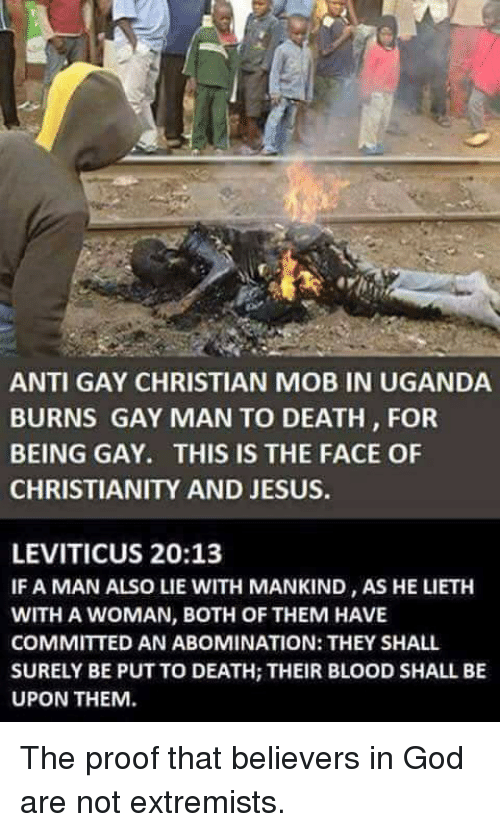
    Historically ignorant. That’s really what this meme amounts to. Being anti-gay has nothing to do with religion. Yes, religion can be used as something to hide behind when someone promotes intolerance, but take away religion, and you’d just find a different justification. Because we aren’t talking about religion here, but about culture as a whole.

    There are a lot of issues here though. First, Leviticus 20:13 has nothing to do with Christians. I have another video that dives into Leviticus, which I will put in the description below. More so, the means of death as prescribed in Leviticus is stoning to death, not burning to death. Also, Leviticus is talking about an act, which is male anal intercourse. Being gay in and of itself wouldn’t be a cause for death.

    So the condemnation isn’t really from the Bible, but is more because homosexuals are a minority, and minorities in general have been persecuted. They are seen as different, and thus aren’t part of “us.”

  • Misquoting Seneca: Gibbon and his Anti-Christian Rhetoric

    Misquoting Seneca: Gibbon and his Anti-Christian Rhetoric

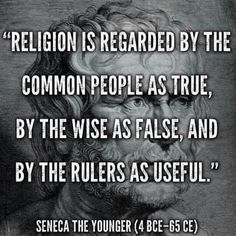
    This meme comes up quite a bit. This is one of my least favorite types of memes, as it really is an appeal to authority, and more often than not, the quotation is inaccurate. This quote is most likely inaccurate, as in Seneca never said it. Looking through Seneca’s works, it just isn’t there.

    The difficult thing with trying to nail this quote down though is that it has been repeated thousands of times, and doing a quick search brings up hundreds of “quote” websites that never cite where the quote came from. However, uncovering the source isn’t impossible.

    The first mention of this quote, that I can find comes around 1903, at earliest. It can be found in the book “Little Journeys: To the home of great philosophers” by Elbert Hubbard. There is no citation there. The quotation is also a bit different as wise is changed to philosopher, and the tense is past, instead of present.

    That isn’t where the quote most likely began though. Instead, it most likely originated with Edward Gibbon in his “The History of the Decline and Fall of the Roman Empire,” which was fully completed in 1789. The relevant section states: 

    “The policy of the emperors and the senate, as far as it concerned religion, was happily seconded by the reflections of the enlightened, and by the habits of the superstitious, part of their subjects. The various modes of worship which prevailed in the Roman world were all considered by the people as equally true; by the philosopher as equally false; and by the magistrate as equally useful. And thus toleration produced not only mutual indulgence, but even religious concord.”

    Basically, Gibbon was writing about the views of the Romans, and later on someone simplified it and placed it on the lips of Seneca in order to give it more authority. It also have to be noted that Gibbons was quite hostile to religion, and his biases often cloud the history he was purporting to record.

    The quote from Gibbons is part of his wider narrative that saw paganism as tolerant, and Christianity as intolerant. He would largely blame Christianity for the decline of Rome. We can see this idea in this particular quote. He’s not talking about religion but modes of worship, and he’s largely talking about paganism here as that is what really prevailed in the Roman world. He then tries to skirt the issue of how there were persecutions of Christians by saying that the Roman leaders just found these modes of worship useful, instead of acknowledging that the Roman leaders also became passionate believers as well.

    So to sum up, the quote isn’t from Seneca, but instead from Gibbons. Gibbons allowed his biases to really guide his history, and the quote really is more of an attack than anything else.

  • Quick Qs; How did Romans and Greeks set up their dating system?

    Quick Qs; How did Romans and Greeks set up their dating system?

    This is some what of a complicated question because both civilizations would change their calendars from time to time. For instance, the Greeks had the Olympiad Calendar. It only counted years, and it did so by using the Olympic Games in order to figure out a count of how many years had passed. Hippias of Elis (according to Plutarch) had first established the sequence of Olympic Victors. He placed the starting date at the games of 776 BCE. But this calendar was only used for historical purposes.

    Greeks also had a Seasonal calendar, but we probably wouldn’t see it as a true calendar as it didn’t really record years, but noted astronomical phenomena, during a given year, that had been witnessed.

    Probably the most famous sort of Greek calendar was the Athenian Civil calendar. It is what they used that is closest to a true calendar in a sense. It regulated the various Athenian festivals during the year. This calendar didn’t use years like we know. They more attached it to the name of a yearly magistrates, or archon, and that was used to see the relation of one year to another.

    For Rome, their Roman calendar began with the foundation of the city of Rome in 753 BCE. But that was used more by historians in order to see the number of years from one event to the next. More often then not, the year was given in the same manner as the Athenian calendar. It was associated with some consul. The Julian calendar would also adopt this as well.

    It really wasn’t until the Gregorian calendar that you begin having a more standardized calendar. For Greece and Rome, they had multiple calendars. A great source on this is Lynn Hunt and his book, Measuring Time, Making History.

  • Quick Qs; When does history become history?

    History, at the most basic sense, is the study of the past. So literally, anything that is the past, including the immediate past, is history. The answer isn’t all that helpful though.

    We can look at 9/11 as a good test case, since the anniversary just recently passed. When I was still in college, the political history course I took (this was in 2008) 9/11 did feature in the text book. 9/11 is a major event that changed the world, or at least the United States, in many regards, especially in the realm of politics. It was argued, and I think effectively, that 9/11 helps break up the history of the U.S. into somewhat of a new era. So we can talk about post 9/11 history and politics as being different than pre 9/11.

    Jumping to today, on the anniversary of 9/11, my 3rd grade son was taught about the event. Its part of the history of the U.S. now and is taught like that.

    We can jump to a different event, one closer to me. In 2016, the Dakota Access Pipeline, the portion in North Dakota, was set to cross the Missouri River north of the Standing Rock Reservation. A protest would ensue. Being a historian, and at the time living in the area, I realized that this event would have considerable impacts, and was an important piece of history unfolding in the area. Of course I wasn’t the only historian that realized that, and many historians set off to record the events that were unfolding, and put them in a larger historical context. I and other historians treated it as history, and sought to document it as best as we could at that time. And there are historians like myself that continue working on the subject, as the after effects of the protest still are unraveling, and new information continues to come to light. So this is a clear example of events instantly becoming history as they are happening.

    One thing that has made history much easier today is that everyone records information that can be value. Researching local history, newspapers are an invaluable resource, and are clear examples of history being recorded as those events are happening. Now, not all reporters may realize that they are recording history, but historians are always digging through newspapers because of that.

    So to sum up, history is anything that is in the past, including the immediate past. And many historians do make great efforts to record that history as much as possible as those events are unfolding.

  • Were there really other presidents before George Washington? Kind of.

    Were there really other presidents before George Washington? Kind of.

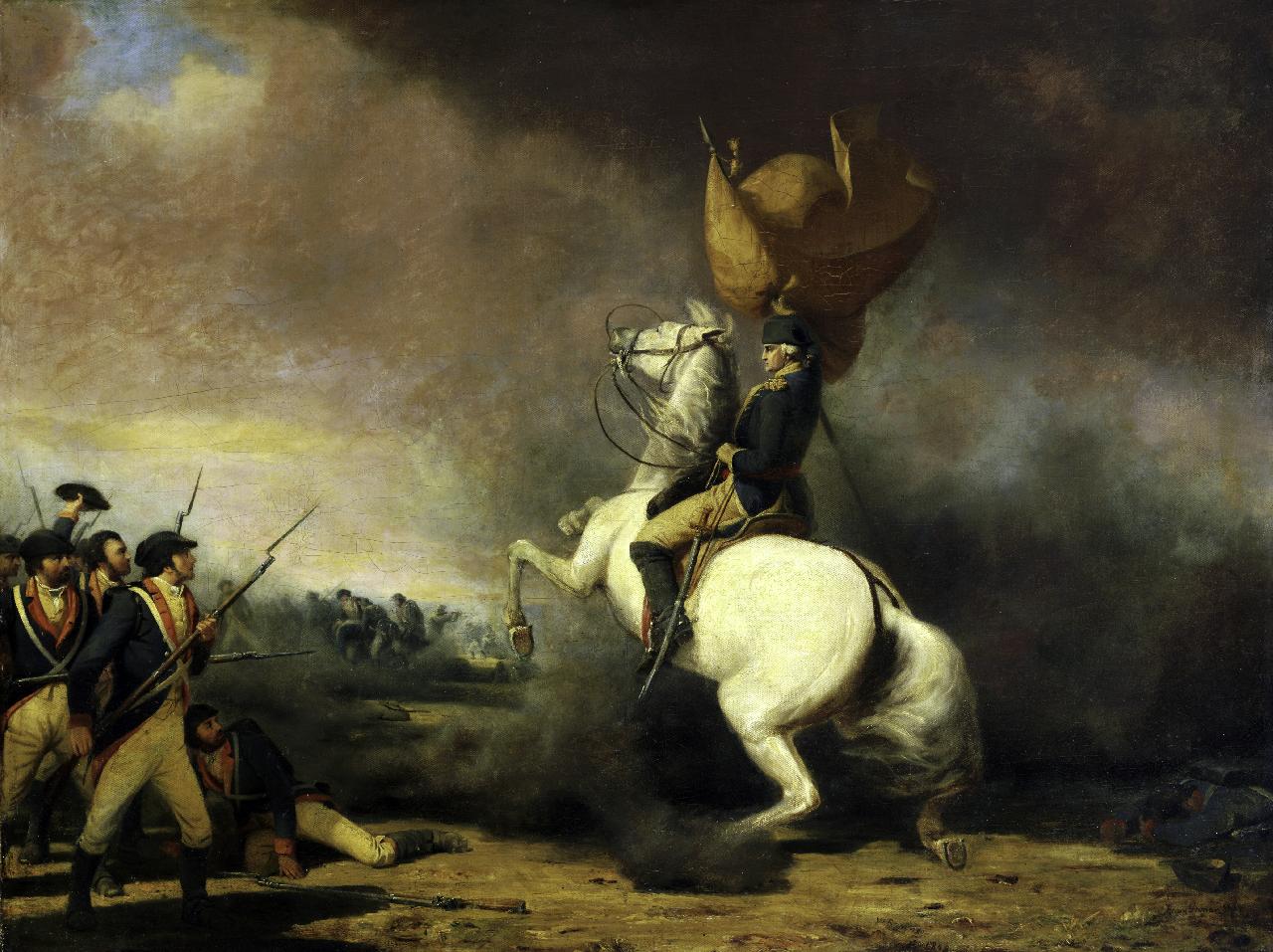
    George Washington would be the United States first president. Before him, the country worked through the Articles of Confederation, and it provided some interesting characters.

    While there were presidents before George Washington, they presided over a different United States, so to say. So as we know, the United States declared independence in 1776. The Revolutionary War ended in 1783, and George Washington was elected in 1789. So we can see why during the most early years, right after the declaration of independence, there was no need to have a formalized president. We were in the middle of the war, and we had adequate military leadership. But as the war was nearing an end, there was a push for a more central leader.

    And here John Hanson steps onto the stage. The year was 1781, and two things occurred. First, the adoption of the Articles of Confederation were passed. It was the first constitution of the United States, but it only provided a very weak central government. In 1787, there was a Constitutional Convention in Philadelphia. There the delegates were authorized to amend the articles, but in secret closed door meetings, a new Constitution was drawn up. It was that Constitution that gave the central government more power. It would be this second constitution that George Washington would be elected under.

    The second important thing in 1781 though was the election of John Hanson as President of the Continental Congress, or as it was also called, President of the United States in Congress assembled. Now, the Articles of Confederation did not have an executive branch. And the President was more of a ceremonial title. But he was required to do a few things such as be a neutral moderator for discussions, sign documents and respond to correspondence.

    Hanson would only served a 1 year term; however, that is because that was that the Articles stipulated. Now, part of the problem with his presidency though was that the Articles didn’t really define the office. This is what it has to say about the position: “The United States in Congress assembled shall have authority … to appoint one of their members to preside, provided that no person be allowed to serve in the office of president more than one year in any term of three years.”

    However, in a book by Edward Cody Burnett, titled the Continental Congress, he makes the argument that others had previously held the office. First it was Samual Huntington, who was basically grandfathered in. He was already presiding over the Continental Congress, and when the Articles went into effect, he just remained. He would later be elected to the office, but he declined the position. Thomas McKean was then elected, but served only a few months, resigning when the British surrendered at Yorktown. A new session of Congress was then held, and it was there that Hanson was elected.

    A quick note. Alfred Knopf wrote a book titled The New Nation: A History of the United States During the Confederation 1781-1789. He points out an interesting character by the name of Robert Morris. Through 1776-1777, he had conducted a lot of the Congress’s transactions, and in 1781, he was asked to serve as Financier, a position that had recently been created. He was reluctant to take the office, but Congress enticed him by giving him quite a bit of power. He was able to make all of his own appointments, with no say from Congress. Anyone in the government who handled money only served if he wanted them to. He could borrow money from any foreign country, and import and export goods, all on the country’s tab. He ran his own foreign affairs department, and could offer contracts to supply the army, without any say from Congress. He would then take over the Marine Department as well.

    He actually backed governmental notes, with his own personal credit, which gave confidence back to money backed by the government. He was really the first executive officer of the United States, even though he wasn’t granted power from a constitution, but from Congress itself.

    When we get down to it though, those presidents under the Articles of Confederation (12 individuals including Hanson) basically served as interim presidents. They didn’t run the country. They didn’t warrant blame or praise for what happened. They served as president, but in a much different fashion than George Washington and those who followed.

  • Never Forget: How we can make today a golden age. Reflections on 9/11

    Never Forget: How we can make today a golden age. Reflections on 9/11

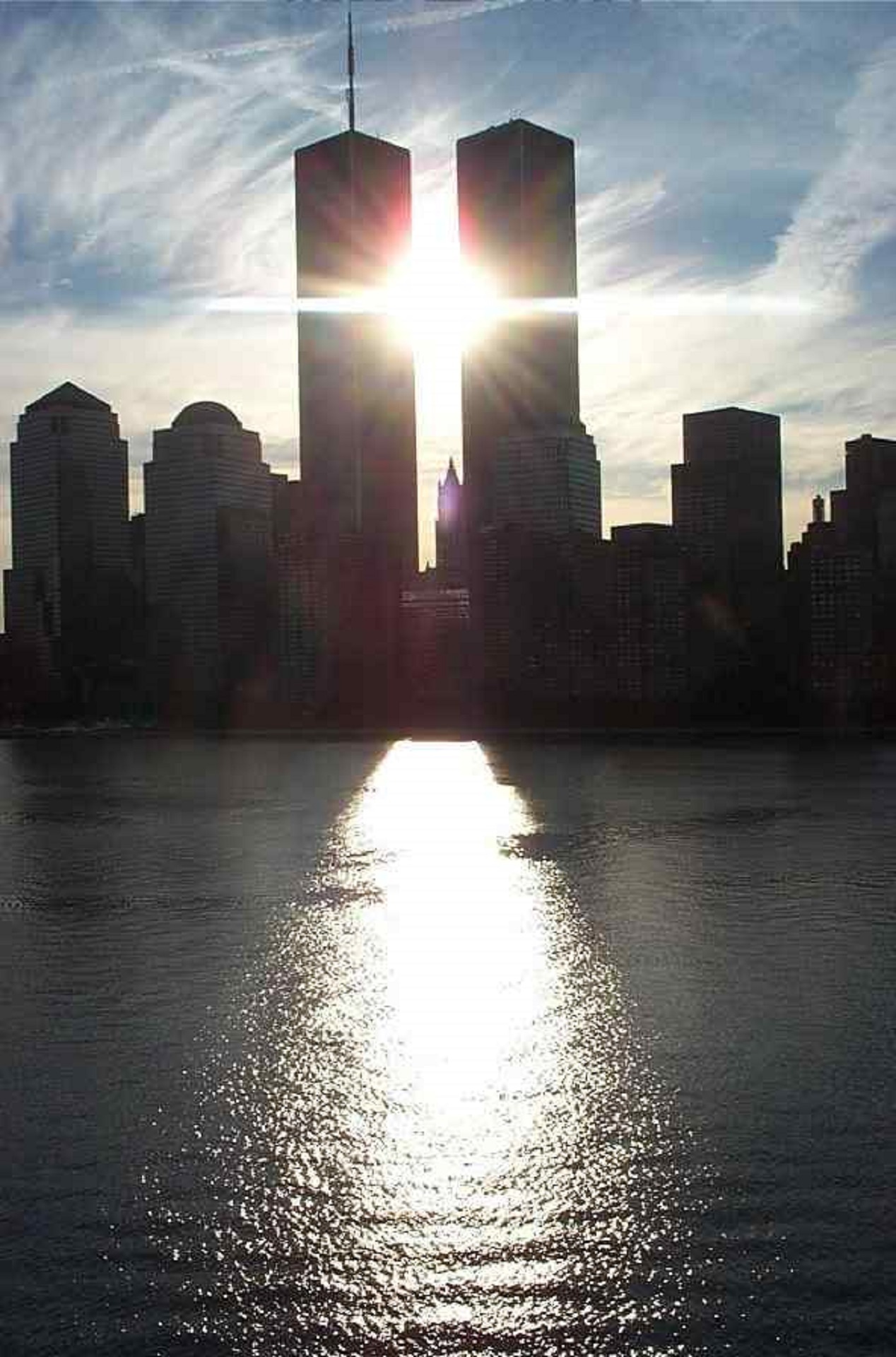
    Never forget. It is a phrase on the nation’s lips every year around September 11th. As a country, we look back on the worse attack on American soil in recent history. The attack on the World Trade Centers changed the history of the United States.

    As a historian, I appreciate dates and ideas that make us reflect on history. As with many of these sorts of events though, it also becomes clear just how fast our understanding of history can change. While social media was filled with individuals commemorating 9/11, many also used the day to flood the services with memes and stories that either tried to co op the day for political purposes, and further divide the country, or that spread a false national epic of how we as a country all came together.

    For many, this has led us to forget a great deal. While we long for September 12th, when all Americans joined together, what we really long for is an idea that never was fully there, that is more a product of nostalgia than of reality. We forget the other half of the story.

    While many would join arms to mourn those who lost their lives, and the heroes who sacrificed their all to save those they could, others were using the attack to create more division, and for some, to make a quick buck. Then, there were others who, while they mourned those who perished, also believed that the US had such an attack coming, that the country somehow deserved it.

    In the days after the 9/11 attacks, various businesses would begin to price gouge. Even in small towns in North Dakota, where I lived at the time, gas stations and a few other businesses helped create additional panic by shooting up the price of fuel. Numerous lawsuits would eventually follow.

    Others would go on to lie about how they survived the Twin Tower attacks, such as Alicia Esteve Head, also known as Tania Head. Head would later become the president of the World Trade Center Survivors’ Network, as she wound up front and center as a “survivor.” Yet at the time of the attacks, she was an ocean away, in her native city of Barcelona.

    She would not be the only one to tell such a lie. Another famous case was Steve Rannazzisi, who later starred on the FXX show, “The League.” He would retell his tale of surviving the collapse of the World Trade Center, which he claimed motivated him to move to California and jump start his career as a comedian. Both would go on living that lie, of being a survivor, for over a decade.

    Then, there were the conspiracy theories that sprouted up, and continue to grow today. In the days that followed the attack, conspiracy theories of how the United States faked the attacks, or manufactured the attacks quickly began to circulate. That the towers were rigged up with explosives to take them down, that the Pentagon was actually hit with a missile, or that nano thermite was somehow involved quickly kicked up a storm.

    That the US sacrificed hundreds of its own citizens for some nefarious purpose, such as to wage a war against Saddam Hussein, would be promoted heavily, even allowing a few individuals to really kick of their own careers among conspiracy theorists.

    But it was not just among the fringe that these ideas took hold. They largely became mainstream as people wanted a reason why we could have been attacked. How could the mightiest nation on earth be attacked so severely by a backwoods group of terrorists? For some, it was inconceivable. For others, it simply was too frightening. That some sort of US cabal was at the center of the attacks, while disheartening, still provided some comfort as it answered the question why better than the official narrative.

    As we continue to move further away from the events of 9/11, and a whole new generation has lived, detached from the events, those theories have gained even more traction. The reason is because with time, many do forget. With time, it becomes easier to distance ourselves from those events, allowing for conspiracy theories to gain better hold.

    However, there is also more to it. Simply, our memories are flawed. As we retrieve those memories about 9/11, we also reprocess them, and in time, change them. Other information is added to our recollections, and certain things are brushed off. Our reality changes, and we fall victim to the passing of time. That is not to say that our memories cannot be trusted at all, as we do retain the gist. But we also must be aware of how time changes how we remember various events.

    Nostalgia is also a very powerful tool when it comes to us remembering the past, or forgetting it. It helps lull us into the grass is greener fallacy, where a fantasy of a bygone time is created in opposition to our own current reality. Today we face an ever-growing division in the country, so we create a past in which the nation joined as one.

    Ironically, as many lament this growing divide, they also continue to add to it. As memes flooded social media around the anniversary of 9/11, many could not help but to use it as just one more political opportunity. As they claimed how they wanted that unity that they remembered on September 12, 2001, they did so by blaming the division on “others.”

    Blame was heaped on Democrats, as well as Republicans. Some pointed at centrists or moderates. Other’s pointed to football players, or athletes in general. And the ever-present boogeyman, either the communist or socialist, also received a healthy dose of blame as well.

    However, that nostalgia, that idea of unity, does not have to go to waste. We do not have to look to some golden age, or a bygone time in order to achieve a togetherness that many of us want. As Ghandi famously said, we can be the change we want to see in this world.

    We have the opportunity to close the division that exists in our country. We do not need an event like 9/11 to achieve such. Instead, we just need understanding, and most of all, respect. We must accept that others have different views, and different ideas. We may disagree with them, but we can do so civilly.

    Part of that is simply having open discussions, so we can see where others are coming from. That means we must drop the insults, and the portrayal of those who disagree as some kind of “other” that is less. It will take work, but together we can find that unity so many deeply desire.


  • Lincoln, Dakota 38, and the Gray

    Lincoln, Dakota 38, and the Gray

    I tend to see things in shades of gray. Maybe its because I like debating with people, and with a lot of gray, there’s a lot of room for disagreements. That or I just find black and white to be too boring. I like having more substance, and room to explore.

    However, I understand black and white. Its easy. It gives definitive answers. And it may just be part of human nature to see things in that manner. For our ancestors, it was a huge benefit. It allowed them to make efficient decisions that their survival depended on; this is a friend as they are in my group, that is a foe as they are other.

    It is a trait that we are born with, and while at one time it may have saved our ancestors lives, it also has caused a lot of trouble. Being a historian, this issue pops up quite regularly. People have a tendency to want to categorize themselves as good, or moral, and those who differ as bad or immoral. Which may be somewhat fine, but when that sort of view is used to define historical figures, often the result is that those individuals become demonized.

    Lets face it. Very few people from history, when completely examined, can be seen as perfectly good or moral. Even those who we idolize as pillars have their dark sides, especially when judged according to today’s sets of guidelines and morality. Simply, morality is subjective and tends to change throughout history. While certain guidelines may remain true, others just don’t stand the test of time. Don’t kill, still a good idea. Lets enslave others, not so good.

    President Lincoln as photographed by Alexander Gardner in 1863.

    Mr. Lincoln

    Since morality changes, as does what society views as acceptable or unacceptable, to judge an individual on today’s standards often isn’t justified, nor does it make sense. To be clear though, that doesn’t mean people get a free pass because they lived 100 years ago. But it does mean we should look at them in a different light. We can’t simply retroject our views onto the past.

    This brings me to President Abraham Lincoln. Increasingly, Lincoln has come under much more scrutiny, and at least in part, for good reason. While at one time he was seen as this mythical hero of the United States, and that view hasn’t completely vanished, increasingly, a dark side of Lincoln has also come to light. For some, this dark side is all that matters, and instead of a hero, he’s been recasted as a tyrannical villain. But history is never so black and white.

    To be fair, Lincoln deserves a bit of both views. He led the country through an incredibly difficult time period. He helped pave the way for complete abolishment of slavery, and for greater equality of black citizens. He helped unify the country, as well as better it through things such as land grant colleges, which include most of our public universities. And if you believe what you see in the movies, he killed vampires.

    But for a good portion of his life, he was horribly racist. He oversaw the largest mass execution in the country’s history; an execution he signed off on. And he saw blacks as inferior, a point he was not shy about when running for president. However, his views also changed over time.

    That’s a key point. Lincoln changed over time. We all do. Our views evolve as new information is introduced. And our views are also shaped by the society in which we belong. To take one or two actions; a single snapshot of history, and assume that is a good reflection of who someone is, just doesn’t work. People are more complex than that.

    Even an event, such as the execution of 38 Dakota men, while a heinous act, is more nuanced than just black or white.

    Drawing of the execution of the Dakota 38 at Mankato, Minnesota, on December 26, 1862.

    Dakota 38

    In August of 1862, an uprising by Dakota tribal members in Minnesota began. It was in response to treaty violations and hunger, primarily. To put it simply, the environment at that time was a tinderbox. For six weeks, the Dakota War of 1862 waged on until the Dakota surrendered at what later became known as Camp Release in Minnesota. The uprising itself can be seen as justified. The United States had violated treaties, which can be argued easily as a justification for war.

    United States forces didn’t see it that way though. Just two days after the surrender, a commission of military officers began trying Dakota men who were accused of participating in the war. 392 prisoners would be tried, and out of those, 303 sentenced to death and 16 given prison terms.

    However, earlier that year, in July of 1862, a new law was passed that made it clear that the President would have to approve any death sentences that came from military commissions. And this is where all the gray area comes into play.

    For Lincoln, the easy route would have been to sign off on all of the death sentences. That is what the people of Minnesota wanted, and what the soldiers wanted. It is also what local politicians were pushing for and in doing so, helped stoke a growing mob that was set to implement vigilante justice if they didn’t get their way. Lincoln was told, under no uncertain terms, that if he did not give the orders for execution, the people of Minnesota, and possibly some of the soldiers, would kill “all the Indians, old men, women and children.”

    In December, he came to his decision. Only those who committed acts of rape would be executed. After only discovering 2 men who were convicted of such, he broadened the criteria to those who committed massacres, making a clear distinction between those who just took place in battles.

    The reason for this is one that would also largely be implemented at the end of the Civil War. The goal was to not act in so much clemency, as the fear was that it would encourage further uprisings. At the same time, Lincoln didn’t want to act with so much severity that it would be deemed cruel.

    40 Dakota men would be convicted of this. One would immediately have his death sentence commuted to ten years in prison, and a second would later have his death sentence commuted.

    It is true that Lincoln could have commuted all of the 303 death sentences. Instead, he commuted the death sentences of 264 men, despite the intense pressure on him, and the very clear threat that had been leveled if he didn’t do what the people of Minnesota wanted.

    At the same time, while the Dakota justification for the war may be sound, not all of their actions can be excused. Rape, the killing of children and women, the killing of unarmed non combatants isn’t justified, on either side. Some 450-800 civilians, on the side of the United States, would be murdered during the war, which included children. To turn a blind eye, and paint all the actions of the Dakota as good, and all the actions of the United States as bad is a mistake and does no justice for the overall history. To put it simply, the entire incident is much more complicated then the black and white terms many try to paint it as.

    Just as an aside, the decision that Lincoln made towards the Dakota, and the rationale behind it, also were in play with how the United States treated the South after the end of the Civil War. It isn’t uncommon for war tribunals to be held, and for people who went outside of the standard practices of war to be tried and imprisoned or executed.

    As with the Civil War

    After the Civil War, this wasn’t an exception. Around a thousand tribunals would be held after the War. The reasoning for such acts is simple; they are to enforce the laws of war.

    Like the decision in the Dakota War of 1862, after the Civil War, leniency was practiced. There would be prison sentences, as well as executions, most famously Henry Wirz and a bit less famous, Robert Kennedy. Champ Ferguson was another largely publicized execution after the war, not to mention the many more executions during the war (such as spurred on by General Order No. 252, in which Lincoln promised to treat Confederate POWs in the same manner that Union Black troops were treated when held as prisoners by the Confederates. While Lincoln couldn’t keep the promise to the T, it did result in a good number of executions as well as forced labor among Confederate POWs).

    The decision was one of attempting to prevent another revolt by laying down punishment, while not being so severe as to be cruel, because reuniting and future peace was still needed. It was a fine line to walk.

    In the end, history is much more complicated than the black and white picture that it is often portrayed as. And we shouldn’t shy away from that.

  • not the noble savage again

    not the noble savage again

    When speaking of Indians, there are two main types of racism that comes out. The first is the obvious, the negative stereotypes and portrayals of Indians, because they are Indian. I’m not going to repeat any of those racist remarks, as we all know what they are.

    But there is another sort of racism that is a bit more difficult to point out. I’d argue that it is just as damaging though, if not more so. It’s the portrayal of Indians as others. Looking at this photo, the view that is being portrayed is this idea of a noble savage. This is a view that grew out of early European contact with various tribes. As Europeans landed in North America, they witnessed what they called pristine forests, that seemed untouched.

    Out of this, they began forming this view of Indians having a special relationship with the environment. That they were natural born ecologist. The idea becomes what is known as the noble savage. The problem is that this view simply isn’t historically accurate, and at the same time, it portrays Indians as others. It dehumanizes them as it strips their humanity from them and instead sees them more in a mythical manner.

    Indians are humans like everyone else. Some are environmentalists, and others aren’t. Some try to protect the environment, and others pollute and destroy it. They are diverse, have differing views, act in different manners. Simply, they are humans.

    If we look at the history of various tribes in North America, we can find examples of both. One of the examples I’m most familiar with is Pueblo Buenito in Chaco Canyon. Here, the ancestral Puebloans built a massive city with immense structures. It was a civilization that rivaled those in Europe at the time and wouldn’t be matched in the US for centuries.

    Building a city of that magnitude required a massive amount of lumber. To feed the population, large fields of crops were needed, which required immense irrigation systems. This resulted in a couple of things.

    Digital reconstruction of Pueblo Bonito by NASA

    First, it resulted in massive deforestation. At the time, the area was a thriving forest. But those trees needed to be harvested for lumber, and as the city continued growing, that meant moving further and further out. This wasn’t a responsible foresting practice, but one that stripped the land of every tree. The ancestral Puebloans would have seen that the last trees were being removed from the canyon, and that did not stop what they deemed to be progress.

    Without the trees, erosion quickly began and only worsened over time. This caused problems for the irrigation system that was created to water their crops. Larger and larger ruts were created, so the irrigation ditches would have to be dug further down until they no longer worked. The final blow was a drought to the area, and instead of changing anything, things continued just as before. Until war broke out and violent atrocities were committed.

    The result today is an area that is a desert, which will most likely never be able to produce fruit again. It was a complete ecocide before Europeans ever stepped on the continent. Pueblo Buenito isn’t the only example of this either. Possibly the most famous example, while not dealing with the Americas, is Easter Island. There, we see a forested island that was destroyed. In order to set up statues, the island was deforested so that those statutes could be moved. What’s most astonishing is that Easter Island isn’t that large, and the inhabitants would have seen that the last tree was being cut down.

    Now the point of this isn’t to demonize Indigenous peoples. It’s to show that they also majorly screw up just like all humans do. They aren’t some natural ecologist. They aren’t more in tune with the earth by birth. They aren’t noble savages or some mythical beings. They are humans.

    To portray Indians as others is really just another way of using them as a mascot. And it paints a history that doesn’t fit with the facts.