Tag: Quick Questions

Format tag: short-form articles answering one precise question.

  • Quick Qs; Did prohibition in the US lead to lower levels of alcoholism?

    Quick Qs; Did prohibition in the US lead to lower levels of alcoholism?

    The answer to this question is rather complicated. If we look at just the alcohol consumption in the United States before and after Prohibition, we do see that directly after prohibition was enacted, alcohol consumption plummeted. In 1919, the consumption of pure alcohol per capita was about .8 gallons. In 1921, it was just over .2 gallons, as shown by Clark Warburton in the Economic Results of Prohibition.

    However, in 1922, that went up to just above .8 gallons per capita, and a year later, it was nearly 1.2 gallons per capita.

    What Warburton shows us is that leading up to prohibition, the amount of alcohol being consumed per capita was already steadily lowering. While the enactment of prohibition would make that rate plummet, directly after enactment, the rate would rise once again, and level off around 1 gallon per capita. According to the World Health Organization, that level today is just over 2.2 gallons per capita. Now, to be fair, that is pretty far below the all time high in 1830, which according to W.J. Rorabaugh, in Alcohol in America, was 7 gallons per capita.

    As I said though, alcohol consumption had been on a decline for nearly a decade. And looking at the number, prohibition only seemed to reduce the amount of alcohol consumed for just a single year. After that, it would once again increase and level out around 1 gallon per capita for a substantial amount of time.

    But we do have to jump back just a bit. Those numbers can be a bit misleading. Rorabaugh, for instance, mentions that in 1850, alcohol consumption had dropped in half from 1830. As he points out though, it wasn’t that Americans were drinking less per person, but that half the population had stopped drinking. So half the population continued to drink just as much.

    However, as suggested, by 1910, alcohol was dropping, as shown by Warburton. Or more specifically, the consumption of pure alcohol, per capita, in gallons, was decreasing. That’s a bit misleading again though. From 1900 to 1913, Americans were actually drinking more alcoholic beverages, but what was happening is that the consumption of hard liquor was declining, while consumption of beer was rising, as Jack Blocker in Consumption and Availability of Alcoholic Beverages in the United States, 1863–1920 demonstrates. By the time prohibition had gone into effect, the consumption of beer and hard liquor was virtually equal. This meant less pure alcohol consumed per capita, but the amount of alcoholic beverages had gone up (it was just weaker).

    And here comes a problem. Mark Thorton, in Prohibition was a Failure, shows that during prohibition, that changed. The consumption of beer nearly disappeared, while hard liquor again started being consumed in higher amounts.

    All in all though, when it came to decreasing alcohol consumption, Prohibition just didn’t work. The reduction in consumption was short lived, and it soon rose to levels higher than what it was just prior to prohibition. That was also partly because before prohibition, in the decade leading up to that time, alcohol consumption was already lowering. What prohibition did do though is cause a spike in the consumption of hard liquor, and nearly destroyed the beer industry.

    The outcome was even worse though. As Thorton points out, federal convicts had risen by 561 percent during the period of prohibition, prison populations rose by 366 percent. Two-thirds of all prison inmates had alcohol related charges.

    Anneliese Anderson, in Organized Crime, Mafia and Governments, also shows that because of Prohibition, the growth of the mafia in the United States grew not only in scope, but also power. Prohibition created a major illegal market for alcohol, and that market was filled largely by the mafia.
  • Quick Qs; Why was moonshine illegal until recently?

    Quick Qs; Why was moonshine illegal until recently?

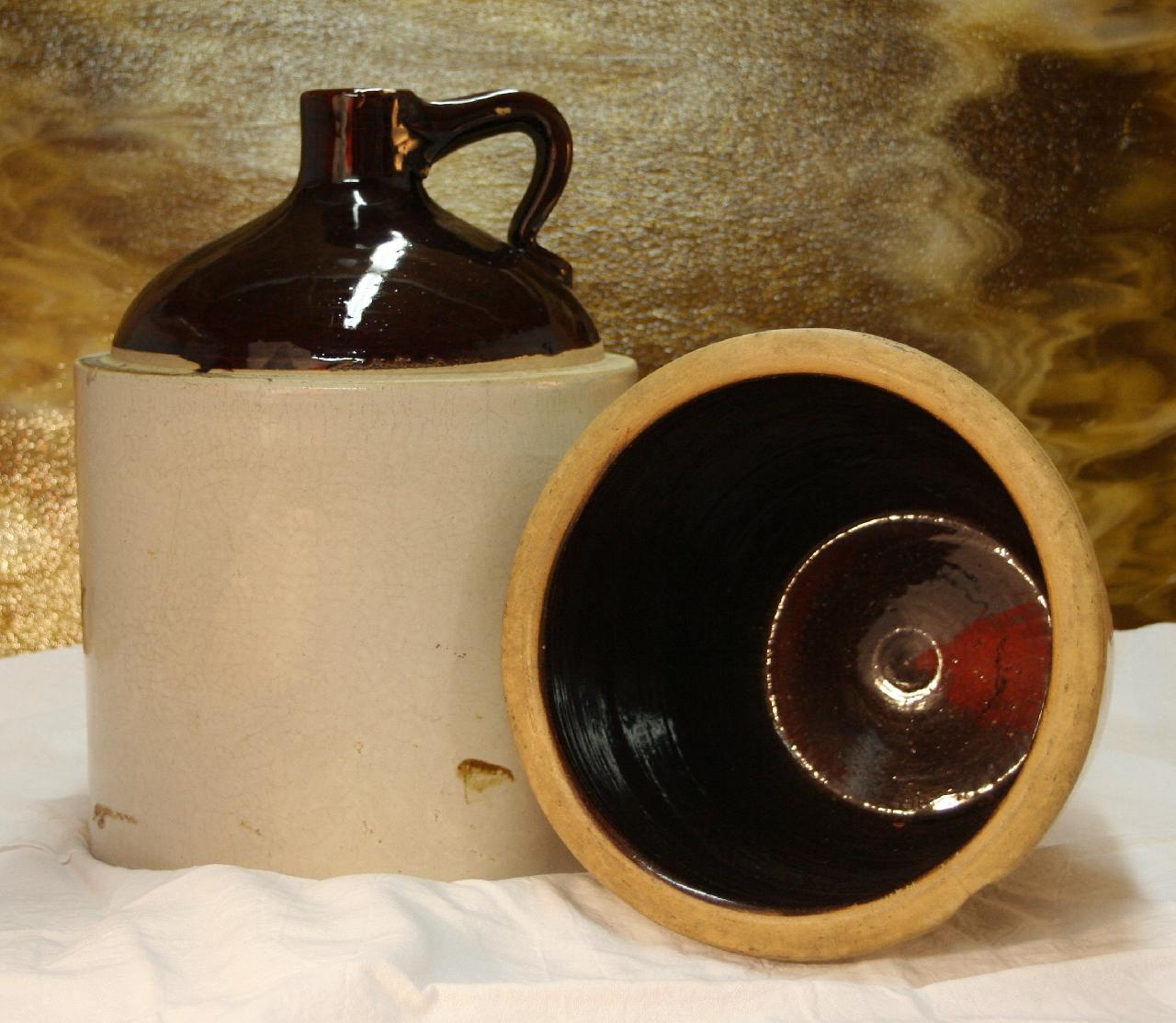
    This is actually a very loaded question. For instance, can it actually be moonshine if it is legal? Many would say that it can’t be.

    This is largely because the term moonshine, in and of itself, was associated with high-proof distilled spirits, that were produced illegally, without government authorization. What made a whiskey moonshine was that it was simply distributed illegally.

    Now, moonshine is generally associated with a white whiskey, one that came to the U.S. with Scot-Irish immigrants, who made a clear, unaged whiskey, that, in English, was called the water of life. This alcohol was legal before prohibition, or could be legal (there were still liquor laws).

    This sort of whiskey did not take on the name moonshine though until later on, and that was only as a slang term, which specifically associated it with being unauthorized by the government; by very definition of the slang term, moonshine was illegal. If it was legal, then it wasn’t moonshine by definition.

    So the question becomes, if you legalize moonshine, is it moonshine? Some are adamant that it is no longer moonshine. However, the type of spirit that is associated with moonshine, generally a clear unaged whiskey (you can also have rum, or other high-proof distilled spirits as well) can be produced legally. So its the same liquor that is associated with moonshine, but whether one can call it moonshine is debated.

    To sum up, moonshine, by the definition of the term, at least historically, has to be illegal. Moonshine is just a high-proof distilled spirit that is distributed illegally. This spirit can be different forms, but often is an unaged, clear, whiskey. The spirit itself has been made legally both before and after prohibition. Today though, there is a push to sell this spirit as a specific alcohol called moonshine, which changes the definition of the term.

  • Quick Qs; How did Romans and Greeks set up their dating system?

    Quick Qs; How did Romans and Greeks set up their dating system?

    This is some what of a complicated question because both civilizations would change their calendars from time to time. For instance, the Greeks had the Olympiad Calendar. It only counted years, and it did so by using the Olympic Games in order to figure out a count of how many years had passed. Hippias of Elis (according to Plutarch) had first established the sequence of Olympic Victors. He placed the starting date at the games of 776 BCE. But this calendar was only used for historical purposes.

    Greeks also had a Seasonal calendar, but we probably wouldn’t see it as a true calendar as it didn’t really record years, but noted astronomical phenomena, during a given year, that had been witnessed.

    Probably the most famous sort of Greek calendar was the Athenian Civil calendar. It is what they used that is closest to a true calendar in a sense. It regulated the various Athenian festivals during the year. This calendar didn’t use years like we know. They more attached it to the name of a yearly magistrates, or archon, and that was used to see the relation of one year to another.

    For Rome, their Roman calendar began with the foundation of the city of Rome in 753 BCE. But that was used more by historians in order to see the number of years from one event to the next. More often then not, the year was given in the same manner as the Athenian calendar. It was associated with some consul. The Julian calendar would also adopt this as well.

    It really wasn’t until the Gregorian calendar that you begin having a more standardized calendar. For Greece and Rome, they had multiple calendars. A great source on this is Lynn Hunt and his book, Measuring Time, Making History.

  • Quick Qs; When and how did we domesticate cats?

    Quick Qs; When and how did we domesticate cats?

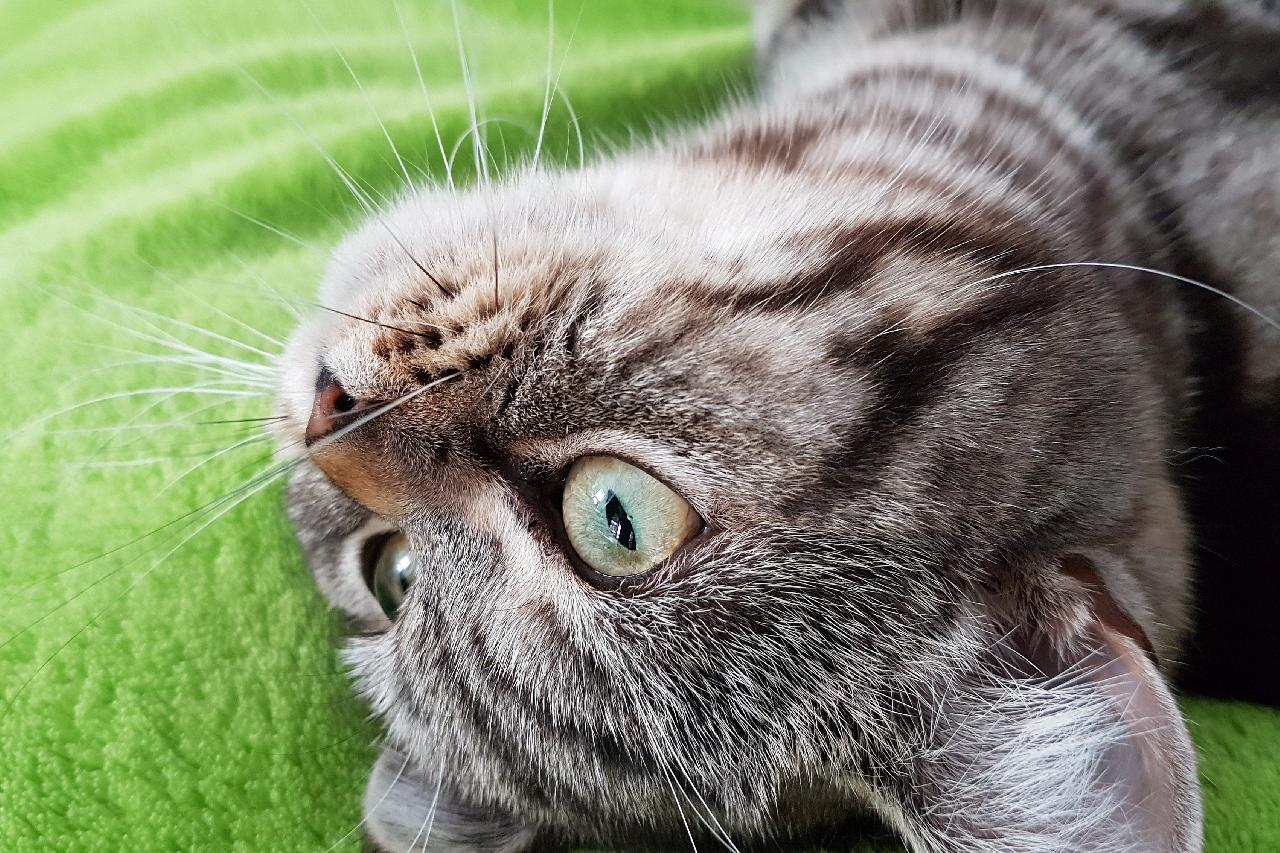
    They weren’t. So probably not the answer you were looking for. But a recent study, that is really just expanding on what other studies have suggested, cats were never truly domesticated.

    The study, published in 2017, titled: The palaeogenetics of cat dispersal in the ancient world, argues that cat DNA has changed very little over the millennia, with one distinct exception, the coloring pattern of the tabby. Even this exception though didn’t occur until the Middle Ages.

    This wasn’t the first study that showed that basic idea. In 2013, another study titled The tiger genome and comparative analysis with lion and snow leopard genomes discovered that tigers and house cats shared 95.6% of the same DNA. This study said that they had diverged almost 11 million years ago.

    Going back to the 2017 study though, what it related was that it was probably around 8,000 years ago that the cat started hanging around farming communities, and from there, got closer to humans because food was easier to get to. Basically, it was a mutually beneficial relationship, because with farming communities, you have more rodents, which gives cats an easy meal, thus ridding the farmers of the pest.

    From there, the cat really spread, seemingly following maritime and terrestrial trade routes. Again, this was most likely mutually beneficial as the cats would continue to keep rodents and other pests out of the trade goods, either in a caravan or ship. This was especially true in regards to shipping routes, as the researchers found Egyptian cats, for example, in Viking areas. In other words, cats were appearing in places they shouldn’t be, and that led the researchers to conclude that they were catching a ride.

    The study suggested that cats became “domesticated” mainly because cats just hung around, and domesticated themselves. However, they also make it clear that domestic cats and wildcats remain nearly identical. The big difference is that house cats are more tolerant. Part of this also is because, as the study argues, there was no need to try to change cats, as they were seen nearly perfect as they were. Unlike dogs, they weren’t selected to perform different tasks, and thus we don’t see the diversification in cats that we do in dogs.

    So in many ways, it seems more like cats have befriended humans, instead of being domesticated.

  • Quick Qs; When does history become history?

    History, at the most basic sense, is the study of the past. So literally, anything that is the past, including the immediate past, is history. The answer isn’t all that helpful though.

    We can look at 9/11 as a good test case, since the anniversary just recently passed. When I was still in college, the political history course I took (this was in 2008) 9/11 did feature in the text book. 9/11 is a major event that changed the world, or at least the United States, in many regards, especially in the realm of politics. It was argued, and I think effectively, that 9/11 helps break up the history of the U.S. into somewhat of a new era. So we can talk about post 9/11 history and politics as being different than pre 9/11.

    Jumping to today, on the anniversary of 9/11, my 3rd grade son was taught about the event. Its part of the history of the U.S. now and is taught like that.

    We can jump to a different event, one closer to me. In 2016, the Dakota Access Pipeline, the portion in North Dakota, was set to cross the Missouri River north of the Standing Rock Reservation. A protest would ensue. Being a historian, and at the time living in the area, I realized that this event would have considerable impacts, and was an important piece of history unfolding in the area. Of course I wasn’t the only historian that realized that, and many historians set off to record the events that were unfolding, and put them in a larger historical context. I and other historians treated it as history, and sought to document it as best as we could at that time. And there are historians like myself that continue working on the subject, as the after effects of the protest still are unraveling, and new information continues to come to light. So this is a clear example of events instantly becoming history as they are happening.

    One thing that has made history much easier today is that everyone records information that can be value. Researching local history, newspapers are an invaluable resource, and are clear examples of history being recorded as those events are happening. Now, not all reporters may realize that they are recording history, but historians are always digging through newspapers because of that.

    So to sum up, history is anything that is in the past, including the immediate past. And many historians do make great efforts to record that history as much as possible as those events are unfolding.